Introduction
Across Africa, a growing debate is emerging around democracy, governance, and development. Increasingly, many Africans are questioning whether the liberal democratic model promoted by Western powers since the 1990s has genuinely delivered economic transformation, political stability, and institutional strength on the continent. While democracy promised accountability, participation, freedom, and development, the lived reality in many African countries has often been characterised by poverty, corruption, elite patronage, institutional weakness, and continued economic dependence.
This frustration is increasingly visible in the Sahel region, where military-led governments in countries such as Burkina Faso, Mali, and Niger have attracted substantial public support despite criticism from Western governments and international institutions. The growing support for these governments reflects a deeper continental frustration with governance systems that appear procedurally democratic but economically ineffective.

The argument emerging in many African discussions today is both controversial and revealing: Leadership should not be judged primarily by whether it is civilian or military, but by how effectively it manages people, institutions, and national resources.
This argument resonates because many Africans are increasingly evaluating governments not by ideological labels but by outcomes.
The crisis of liberal democracy in Africa
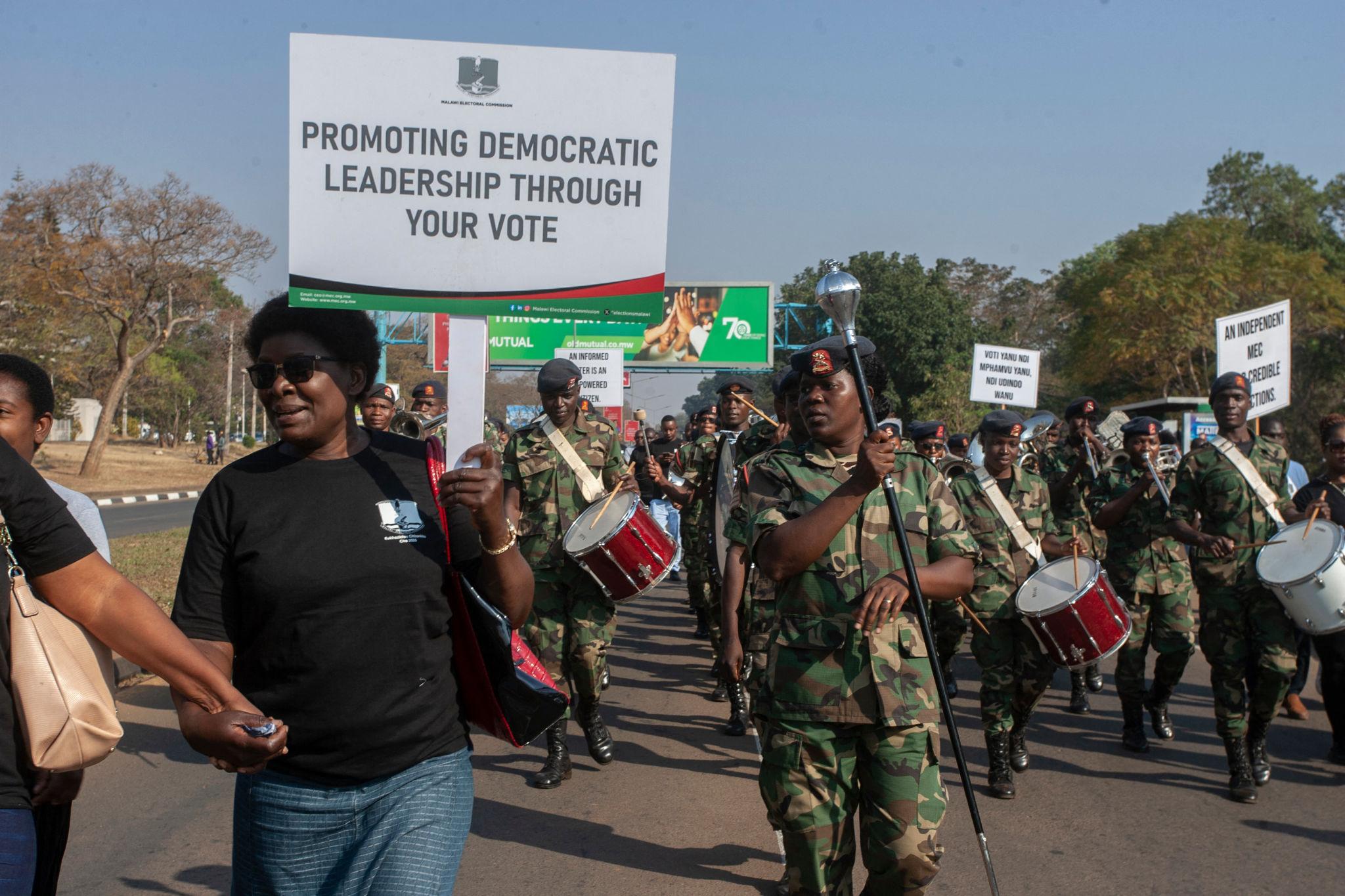
After the Cold War ended, many countries in Africa started to shift towards more open political systems. Multiparty democracy, along with constitutional reforms and competitive elections, became essential elements of governance throughout the continent. The belief behind these changes was that opening up the political space would lead to improved governance and spur economic growth. I can still remember being in Form 3 at Nkhata-Bay Secondary School when Malawi first adopted multiparty democracy in 1993; it felt like a new beginning for our country.
In theory, elections would create accountability, accountability would improve governance, and improved governance would drive development. In practice, however, many African countries experienced a different reality. While political freedoms have expanded, economies have often remained externally dependent, weakly industrialised, structurally unequal, and highly vulnerable to global shocks.
Political competition often turned into a game of favours and negotiations among the elite, rather than focusing on real, long-term development plans. Elections became costly battles for the chance to tap into state resources, leaving vital areas such as manufacturing, industrialisation, and technology lagging behind.
Many Africans are beginning to see liberal democracy in a different light. Instead of viewing it as a pathway to meaningful change, they often associate it with corruption, persistent political strife, reliance on foreign aid, and a government that struggles to function effectively. This sense of disappointment and disillusionment is contributing to a shift in the political atmosphere in various regions across the continent.
The Sahel Region and the rise of alternative governance narratives
The Sahel region really highlights a significant change in how political ideas are evolving. Take Burkina Faso, for example. Under Ibrahim Traore’s leadership, the government has been focusing more on themes that resonate with the people’s sense of identity and pride. They emphasise sovereignty and anti-imperialism, advocating for resource nationalism that puts local interests first. It’s about mobilising the state and rallying citizens around a shared vision of national dignity, reflecting a desire for self-determination and empowerment.
Supporters argue that the government has challenged external influence, projected stronger leadership, attempted to regain control over national resources, and responded more decisively to insecurity than previous civilian administrations. The same broader sentiment is visible in Mali and Niger, where military-led governments have similarly attracted support by presenting themselves as defenders of sovereignty against external domination.

What is striking is that many supporters of these governments are not necessarily celebrating military rule itself. Rather, they are reacting against what they perceive as the failures of liberal democratic systems that produced weak leadership, corruption, insecurity, and continued dependency. For many Africans, the key issue is no longer whether leadership is military or civilian. The key issue is whether leadership protects sovereignty, manages resources effectively, strengthens institutions, and improves people’s lives. This explains why many citizens increasingly prioritise state effectiveness over procedural democratic form.
These sentiments have been echoed by President Duma Boko of Botswana, Paul Kagame of Rwanda, and the EFF leader, Julius Malema, of the Republic of South Africa.
The Malawi experience since 1993
Malawi’s experience since the transition to multiparty democracy in 1993 reflects many of these tensions. The country unquestionably achieved important democratic gains, including political freedoms, media openness, expanded civic participation, and competitive elections. These gains are important and should not be dismissed lightly.
However, economically and structurally, many Malawians increasingly feel that the country has struggled to achieve meaningful transformation. Over the past three decades, industrialisation has remained weak, donor dependence has deepened, corruption scandals have persisted, youth unemployment has increased, and public institutions have struggled to deliver efficiently. At the same time, politics has become increasingly expensive and consumption-oriented. Public expenditure is often directed toward subsidies, recurrent expenditure, political appeasement, and short-term visibility projects, while productive sectors capable of transforming the economy remain underfunded.
Most Malawians are frustrated as they look around and see that while democracy has opened up more political competition, it hasn’t led to the economic improvements they hoped for. Instead of witnessing industrial growth and rising living standards, many citizens associate democracy with constant political conflict, elite power struggles, corruption, and a lack of real progress. It’s a sentiment that reflects their yearning for change and a better future.
The political economy problem
The deeper issue may not be democracy itself, but the political economy that emerged around it. In many African countries, democratic systems were layered onto economies characterised by weak industrial bases, low productivity, donor dependence, and fragile institutions. This resulted in political systems heavily focused on distributing resources rather than generating wealth.
Governments became incentivised toward short-term political survival, patronage management, and recurrent consumption spending rather than industrialisation, technological development, and productive transformation. This is why many African economies continue exporting raw commodities while importing finished goods, technology, and industrial systems. The result is democracies that are politically active but economically weak.
In his article “Building More Churches Than Industries,” published in the Weekend Nation on May 23, 2026, Mavuto Bamusi reflects on the growing sentiment among Malawians regarding the challenges the country faces in achieving meaningful economic transformation. He highlights that while church construction has proliferated, industrialisation and investment in productive sectors have languished, mirroring concerns about Malawi’s economic stagnation over the past few decades.
Bamusi emphasises the need for a significant shift in mindset among churches and the general populace regarding fundraising efforts. Instead of focusing on building more churches and similar structures, he advocates for directing resources towards investments in productive sectors that can foster economic growth. This perspective highlights a broader issue in Malawi, where the conventional way of thinking often prioritises short-term visible outcomes over long-term sustainable development. Adopting a more investment-oriented mindset could lead to substantial improvements in the nation’s economic landscape.

This critique resonates deeply with the broader narrative of Malawian economic struggles, in which the prioritisation of consumption politics over productive investment hampers the potential for transformative growth. Bamusi’s article serves as a poignant reminder of the urgent need to shift focus towards building industries that can sustainably uplift the economy and reduce reliance on foreign aid.
The question of western influence
The criticism of “Western imperialist democracy” reflects more than simple political rhetoric. It reflects frustration with governance systems that many Africans feel were externally promoted without sufficiently addressing economic sovereignty, industrialisation, and state capacity. Many citizens increasingly believe that Africa’s imported political systems are trapped within externally dependent economic structures. In this environment, democratic systems often appeared politically open but economically constrained. This partly explains why leaders who project sovereignty, nationalism, anti-imperialism, and state-led development are increasingly attracting support across parts of Africa.
The speaker in this Facebook video challenges the democratic systems promoted by the Western imperialists in African countries. The video appears to be from a formal regional or international policy conference involving West African delegates and foreign participants. The environment suggests a diplomatic or policy dialogue, likely in Francophone West Africa, focused on governance, sovereignty, democracy, and development. The speaker seems to be a Burkinabè intellectual, policymaker, activist, or political representative rather than a military officer. He speaks with strong ideological conviction and addresses an audience that includes Western participants seated beside African delegates. However, I still cannot conclusively verify the speaker’s exact name or the conference title, as the banner text and audio quality are insufficient for definitive identification.
The speaker begins by challenging dominant Western narratives about Africa. He argues that Africa is often discussed internationally through the lenses of outsiders rather than Africans themselves. His tone suggests frustration with external judgments about governance, international media portrayals, and foreign prescriptions for African political systems. He implies that African countries are continuously told how to govern, how to structure democracy, and how to manage economies, while the same foreign actors benefit from Africa’s dependence. The core message is that Africa has political independence on paper, but not full intellectual or economic sovereignty.
The speaker questions whether liberal democracy, as promoted by Western countries, has genuinely improved African lives. He suggests that elections alone do not create prosperity, democratic rituals do not automatically produce dignity, and multiparty politics can coexist with poverty and exploitation. He appears to compare countries that hold regular elections but remain poor with countries pursuing stronger nationalist or sovereignty-driven governance models. The implicit argument is that governance should be judged by results, not labels. This is a classic developmental-state argument often heard in anti-imperialist political discourse. He argues that Burkina Faso has achieved much more between 2022 and 2026 under military rule compared to 1960-2022 under the Western democratic governance system
The real question facing Africa
The debate should therefore move beyond simplistic binaries such as:
- military versus civilian rule
- democracy versus authoritarianism
The more important question is: What type of governance system can produce long-term development, institutional strength, and economic transformation in Africa? Historically, successful developmental states often combined strategic state coordination, long-term planning, industrial policy, disciplined institutions, and a national economic vision. Africa’s challenge may therefore not simply be democracy itself, but the absence of developmental states capable of transforming economies while maintaining legitimacy and accountability.
Conclusion
The frustration emerging across Africa, particularly in the Sahel region, reflects growing disillusionment with governance systems that expanded electoral competition without delivering sufficient economic transformation or institutional strength.
In Malawi, the experience since 1993 has intensified similar concerns. While political freedoms expanded, many citizens increasingly feel that economic transformation has lagged behind, and that democratic politics have often become detached from productive development.
This does not necessarily mean democracy itself is inherently harmful. However, it does suggest that democracy without economic transformation, state capability, and productive development can generate frustration, instability, and dependency. Democracy, in its current fashion, is the source of our problems.
Closing reflection
The real issue facing Africa is not whether leadership is military or civilian. The real issue is whether leadership can build productive economies, strengthen institutions, manage resources effectively, and improve people’s lives. Because ultimately, citizens judge systems not only by the freedoms they promise, but by the futures they produce.
Leave a Reply