The Sunset Clause as a recurring logic of negotiated power-sharing in Southern Africa: A Comparative analysis in Political Economy and Governance.

Introduction
In 1992, Joe Slovo wrote an important piece for The African Communist titled “Negotiations: What Room for Compromise?” This article introduced a pivotal idea in the democratic transitions of Southern Africa: the Sunset Clause (Slovo, 1992). The concept might sound straightforward at first glance. It suggests that when two competing political groups find themselves unable to completely outmanoeuvre one another, and continuing that struggle could lead to disaster for the nation, the stronger party may offer a temporary concession of power. This concession is time-limited and can be reversed, allowing for a peaceful transfer of authority. In essence, it’s like the sun setting on the horizon; a clear endpoint is established, after which it’s anticipated that the balance of power will shift significantly.
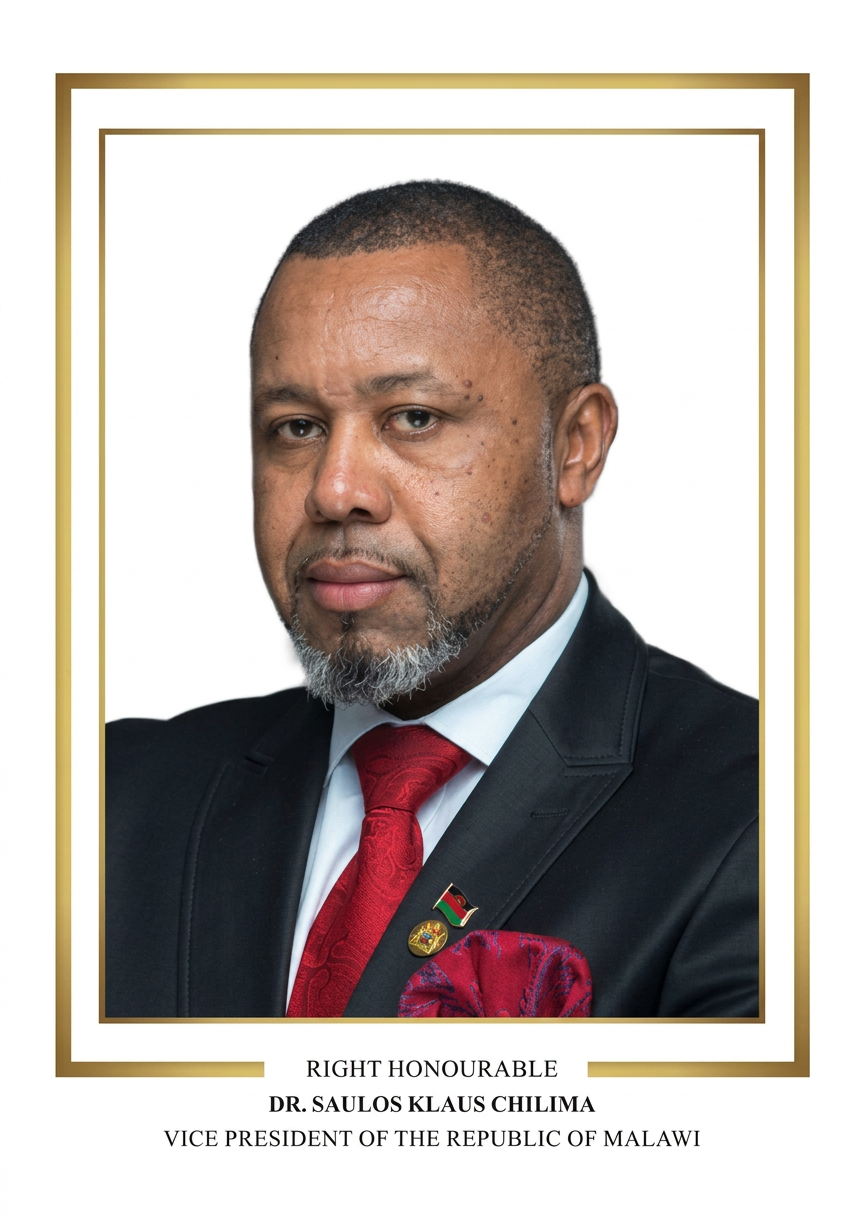
This article takes a fresh look at Slovo’s original ideas and explores how similar political dynamics have played out in Malawi’s democratic history, albeit in different forms. Notably, two significant moments stand out: the 1994 collaboration between Chakufwa Chihana’s AFORD and Bakili Muluzi’s UDF, which established the role of Second Vice President, and the 2020 Tonse Alliance, where Saulos Chilima chose to step aside as the presidential candidate in favour of Lazarus Chakwera. In both instances, the leaders had the option to demand the presidency but instead opted for a more humble, transitional position as part of a negotiated agreement. Examining these events through Slovo’s framework highlights their impactful nature while also revealing their inherent vulnerability.
I. Slovo’s original Sunset Clause (1992).
Joe Slovo, born in Lithuania in 1926 and passing away in 1995, was more than just a political leader; he was a passionate advocate for change. As a long-time leader of the South African Communist Party, a senior figure in the African National Congress (ANC), and former chief of staff of uMkhonto we Sizwe, he played a pivotal role in the fight against apartheid. After years in exile, Slovo returned to South Africa in 1990, ready to engage in the vital negotiations that would help dismantle the oppressive regime. His reputation as the so-called “Rooigevaar” or “Red Danger” painted him as a fearsome figure in the eyes of the National Party. Yet, it was precisely this man, who had endured so much struggle, who reached out with an olive branch, showing a commitment to peace and reconciliation in a deeply divided country.
Slovo’s proposal had three load-bearing elements:
- A Government of National Unity (GNU) – a power-sharing coalition between the ANC and the National Party for the five years following the first democratic election.
- Guarantees for civil servants – job security for the existing, predominantly white Afrikaner bureaucracy, protecting it from immediate purge.
- An amnesty process – the seed of what became the Truth and Reconciliation Commission.
The rationale was strategic rather than sentimental. Slovo argued that power-sharing was a temporary arrangement to reach elections, after which the balance of forces would be completely transformed (O’Malley, n.d.). He also recognised a practical truth that liberation rhetoric tended to obscure: the ANC had no civil service waiting in the wings. A new government would be better served by working with the old bureaucracy than by provoking it into sabotage. The Sunset Clause, in this framing, was the gradual phasing out of white rule rather than a dramatic, destabilising handover (We the People South Africa, 2021).
The clause really stood its ground. It supported the GNU, and in a twist of fate, Slovo found himself as the Minister of Housing in the very coalition he had helped create. He worked alongside members of the National Party until he passed away in January 1995. It’s interesting how life works out sometimes, isn’t it?
II. The Conceptual Core: What makes a “Sunset” Settlement?
Before turning to Malawi, it is worth isolating the recurring features of a sunset-type arrangement, because the Malawian cases share the function even where they differ in form:
- A negotiated pact between rivals rather than an outright victory by one side.
- The voluntary subordination of maximalist ambition — a leader who could contest for the top accepts something less.
- A time-bound or transitional horizon, explicit or implied, after which power is expected to shift.
- Mutual guarantees that make the concession survivable for the conceding party (offices, protections, a place in the new order).
- An expected change in the balance of forces that justifies the bet.
Sunset settlements are essentially agreements made by those in power, often behind closed doors. They rely on the trust and goodwill of the main players involved to hold up over time. However, this very reliance on trust can also be their downfall, as demonstrated by the three cases we’ve looked at.
III. Malawi Case I: Chihana, Muluzi and the creation of the Second Vice Presidency (1994–1996)
Chakufwa Tom Chihana (1939–2006) is often remembered as the “father of Malawian democracy.” A dedicated trade unionist and a recipient of the Robert F. Kennedy Human Rights Award, Chihana played a pivotal role in Malawi’s political landscape. He was a key figure in the underground movement that compelled Hastings Kamuzu Banda to allow the 1993 referendum on political pluralism. His passion for democracy led him to found the Alliance for Democracy (AFORD).
In 1994, Malawi held its first multiparty elections, a historic moment for the country. However, the results showcased a divide, with voting patterns following regional lines. Although Chihana was a respected and influential democracy advocate, AFORD secured only third place, while Bakili Muluzi’s United Democratic Front (UDF) took the lead, and Banda’s Malawi Congress Party (MCP) came in second. Despite this outcome, Chihana’s contributions to Malawi’s democratic journey remain significant and lasting.
The sunset logic comes into play here. The United Democratic Front (UDF) had assumed the presidency but did not hold a parliamentary majority. Initially, AFORD joined forces with its former rival, the Malawi Congress Party (MCP), to oppose the UDF both inside and outside the National Assembly, a situation that Muluzi found genuinely threatening. In response, Muluzi persuaded AFORD to join the government. The constitution was amended to create a new position: the Second Vice President, into which Chihana was appointed, while several AFORD officials were given cabinet positions (Maravi Post, 2025).
The parallels to Slovo’s design are striking:
- A leader of an independent party (Chihana) subordinated his own presidential standing to enter a power-sharing executive.
- A bespoke constitutional concession (a newly created office) made the arrangement survivable for the junior partner, much as the GNU and civil-service guarantees did in South Africa.
- The arrangement was understood to be transitional and contingent rather than permanent.
The political alliance resembled a sunset clause; it ultimately came to an end. This coalition lasted approximately twenty months, after which Chihana withdrew in 1996, citing corruption within the UDF. As a result, AFORD lost several of its prominent members. The position of Second Vice President then remained vacant for nearly two decades, highlighting how personalised and context-dependent the original agreement had been. In an interesting turn of events, the post was reinstated in October 2025, when Enock Chihana, the son of Chihana, was sworn in as President Peter Mutharika’s vice president, following an electoral pact between AFORD and the DPP. This same coalition strategy emerged again a generation later (Nyasa Times, 2025).

IV. Malawi Case II: Chilima, Chakwera and the Tonse Alliance (2020)
The 2020 case clearly reflects the Slovo principle in Malawi and holds additional significance: much like South Africa’s transition, it was mandated by the courts. After the Constitutional Court annulled Peter Mutharika’s contested victory in the 2019 election due to widespread irregularities, it ordered a new presidential election. Notably, the court replaced the first-past-the-post electoral system with a requirement that candidates secure more than 50% of the vote plus one. This change rendered fragmented, ego-driven opposition campaigns ineffective and created strong incentives for political parties to unite (Chatham House, 2020).
Saulos Klaus Chilima, an economist, former corporate executive, and leader of the United Transformation Movement (UTM), had compelling reasons to run independently again. In 2019, his newly registered party performed impressively, finishing third with over a million votes, accounting for around 20% of the total votes cast. However, in the June 2020 re-run, Chilima decided to cede the top position and served as Lazarus Chakwera’s running mate under the Tonse Alliance, a coalition of nine opposition parties formed to unseat Mutharika’s Democratic Progressive Party (DPP). This strategic decision proved successful: the alliance won, making Malawi the first African country to have a court overturn an election and then defeat the incumbent in a re-run (Mail & Guardian, 2024).
The concept of “sunset architecture” is clearly illustrated here. The Tonse agreement is widely reported to have included a rotation provision in Clause 3.1.3. This provision states that the presidential candidate in the fresh election “shall not be the presidential candidate during the immediate next election and shall cede the candidacy to the running mate” (Nyasa Times, 2025). According to the UTM’s interpretation, this means that Chakwera would serve one term from 2020 to 2025 and then pass the candidacy to Chilima. This may be seen as a sunset clause, a negotiated, time-bound concession in which one rival agrees to take a junior position now, with the expectation of ascending to a more prominent role in the future.
The situation illustrates the fragility of political agreements. The Malawi Congress Party (MCP) disputed the literal and binding interpretation of a particular clause, while President Chakwera publicly insisted that no agreement confined him to a single term. Tensions escalated due to various factors, including Chilima’s arrest on corruption charges in 2022 (which were later dropped), the public dispute over succession, and, ultimately, the plane crash in June 2024 that resulted in Chilima’s death. Shortly after this incident, the United Transformation Movement (UTM) formally withdrew from the alliance. As with previous agreements, the settlement could not withstand the loss of trust between its leaders.
V. Comparative Analysis.
| Dimension | Slovo / GNU (1992–94) | Chihana–Muluzi (1994–96) | Chilima–Chakwera / Tonse (2020) |
| Trigger | Negotiated end to apartheid; threat of civil war / coup | UDF presidency without a parliamentary majority | Court-annulled election; new majority electoral rule |
| Conceding actor | National Party (incumbent) | Chihana / AFORD (third-placed party leader) | Chilima / UTM (party leader, strong 2019 showing) |
| Form of concession | Time-limited GNU + bureaucratic guarantees + amnesty | Entry into government + new constitutional office | Running-mate slot + alleged term-rotation clause |
| Time horizon | Explicit: five years | Implicit / transitional | Explicit (disputed): one term, then rotation |
| Survivability mechanism | Constitutionalised power-sharing | Bespoke office (2nd VP) + cabinet posts | Coalition offices + succession pact |
| Outcome | Held to term; orderly conclusion | Collapsed at ~20 months | Disintegrated amid dispute and Chilima’s death |
Three points emerge.
First, the common engine is the subordination of ambition to arithmetic. In each instance, a leader who could have sought the top position realised that a unified, negotiated approach would benefit both the country and themselves more than pursuing an ambitious individual bid. Slovo set aside his revolutionary maximalism; Chihana relinquished his claim as a founder of democracy; Chilima prioritised a credible presidential candidacy.
Second, the form adapts to the constitutional moment. Slovo’s approach involved a formal, time-limited agreement based on the GNU (Government of National Unity), while Malawi’s methods were more improvised. They included the establishment of a new office in 1994 and the introduction of a private rotation clause in 2020. These were partisan agreements rather than compromises aimed at creating a constitution. This distinction is important: South Africa’s clause was embedded in the supreme law, whereas Malawi’s relied on ordinary agreements and personal integrity. An entrenched clause ensures greater durability.
Third, all three reveal the Achilles’ heel of elite settlements: they are only as strong as the trust between principals. Slovo’s clause endured primarily because its framework was established, public, and constitutional. In contrast, the Malawian agreements were more personalised, less institutionalised, and in the 2020 case, literally secret; as a result, they were correspondingly fragile. When trust broke down, there was no neutral structure in place to maintain the agreement.
VI. The long shadow: Did the settlement defer the economic question?
If the previous sections view the Sunset Clause as a feat of political engineering, this section addresses its most serious criticism. The concern isn’t that the clause failed; in fact, it was politically successful. The issue is that it facilitated a transfer of political power while leaving the economic framework of apartheid largely unchanged. Critics argue that it achieved political freedom without providing economic freedom. Slovo believed that the balance of forces would shift significantly once the ANC came to power. However, the critique suggests that while the political balance has shifted, the economic balance has not.
The empirical backdrop.
Three key data points support this argument. First is the issue of land ownership. A 2017 state land audit revealed that, among individual landholders, white South Africans, who make up less than 10% of the population, owned approximately 72% of farmland (Africa Check, 2019). An audit by AgriSA similarly estimated that white ownership of agricultural land was about 73% in 2017, down from roughly 85% in 1994. This indicates that three decades of reform have changed this figure by only about 12 percentage points (AgriSA via Bloomberg, 2017). While these figures are contested, since they exclude land held by companies, trusts, the state, and communal areas, and definitions vary, no serious analysis suggests a near-proportional redistribution of land.
Second, South Africa faces significant inequality and high unemployment. The country remains one of the most unequal societies globally, with a broad unemployment rate surpassing 40% by 2024–2025 (Human Rights Watch, 2026).
Third, there is the issue of xenophobia. The recurrent waves of anti-immigrant violence (notably in 2008, 2015, and again from 2024 to 2026) are often analysed by scholars as manifestations of displaced economic frustration. They describe a situation of “relative deprivation,” where Black South Africans, feeling excluded from the economic gains since 1994, direct their frustrations towards African migrants instead of the systemic structures that marginalise them (IJR, 2026).
The case for blaming the settlement.
Advocates of this critique, most notably the Economic Freedom Fighters, argue that the African National Congress (ANC) compromised on essential issues when its support base was ready to push for more. They claim that the negotiated settlement, which included the Sunset Clause as a critical element, cemented the existing economic status quo (Munusamy, 2015). According to this perspective, the assurances provided to reassure white capital and the bureaucracy, such as the continuity of property rights, an independent central bank, protected pensions, and a professional civil service, were precisely the mechanisms that prevented the redistribution of apartheid-era wealth. Some individuals who participated in the negotiations have partially acknowledged this viewpoint, admitting that maintaining stability for white businesses and the economy was a price paid for a peaceful transition and that “some of us got co-opted” in the process (Munusamy, 2015). Viewed in this light, issues such as land concentration, structural unemployment, and the xenophobic violence it generates may all be traced back to a transition that prioritised political peace while postponing urgent economic reforms indefinitely.
The case against over-attributing.
The counter-argument is quite significant, and a thorough analysis must take it into account. First, there’s the issue of causation versus correlation. To blame a transitional clause from 1992 to 1994 for outcomes in 2026 overlooks more than thirty years of post-settlement decisions made by governments with full political power. These decisions include a willing-buyer–willing-seller land policy and its implementation failures; the erosion of state capacity due to “state capture” by the Guptas and corruption; a public education system that has not adequately prepared the majority to compete; and global economic forces that are beyond the influence of any single clause. Notably, the sunset provisions themselves expired by 1999; the economic trajectory since then is primarily a governance issue.
Second, let’s consider the scope. Slovo’s clause was focused on the Government of National Unity, civil-service guarantees, and amnesty, rather than on the property protections established in section 25 of the final Constitution, which were negotiated separately at CODESA. Mixing these two issues overstates what the Sunset Clause actually resolved.
Third, there’s the counterfactual scenario. The realistic alternative to compromise was not a rapid and orderly redistribution of resources, but rather the credible risk of civil war, a military coup, capital flight, and a failed transition. These outcomes would have disproportionately affected the very poor, for whom the critique is purportedly advanced. Supporters argue that the settlement facilitated a peaceful transfer of power, something that a more extreme approach could not have achieved, and that the failure to use the subsequent decades of unchallenged power to transform the economy represents a separate and serious indictment of governance, not of the original agreement.
What does this mean for the argument?
The most defensible position is a nuanced one: the Sunset Clause is guilty in part, but not as the sole cause, but as a pivotal moment that established a lasting pattern. In this pattern, the political question of who governs was decisively settled, while the economic question of who owns was set aside for later discussion, a “later” that never fully materialised. This represents the postponed resolution of elite negotiations.
In this context, the comparison with Malawi becomes sharper rather than unclear. The Chihana–Muluzi and Tonse agreements were, even more overtly than Slovo’s, contests over power and succession, determining who holds office and for how long. They did not address the structural issues that actually fuel discontent in Malawi: regional inequality, rural poverty, the patronage economy, and the concentration of opportunities.
A settlement that merely rotates elites without changing underlying structures may achieve political stability while allowing the underlying grievances to fester. South Africa’s experience serves as a cautionary example of this logic: a transition can succeed entirely on political terms and still leave society in a volatile state because the agreement was never intended to address the factors that contribute to poverty.
VII. Conclusion: A recurring language of transition.
The Sunset Clause is best understood not as a singular event in South Africa, but rather as a framework, a recurring approach used by Southern African elites to navigate the precarious period when one regime is ending and another has yet to be established. Its fundamental message remains consistent across borders: I won’t demand everything at this moment in exchange for a credible promise for the future, supported by guarantees that are acceptable to both parties.
In Malawi, the political lineage runs from Chihana’s improvised Second Vice Presidency to the contested rotation clause of the Tonse Alliance, and it may extend into the revival of the very office Chihana once held in 2025. The key takeaway for those involved in governance and political economy is that such arrangements are not necessarily naïve; as demonstrated by Slovo’s success, they are indeed transformative. However, the long-term stability of such settlements depends on their institutional design rather than mere goodwill. Settlements that are public, time-limited, and grounded in law tend to be more resilient. In contrast, those based on private agreements and personal trust are likely to vanish suddenly and often in a contentious manner.
The distinction between a sunset and an eclipse might be the most valuable insight from the Slovo legacy for anyone studying coalition politics and negotiated transitions in Malawi today. However, South Africa introduces a sobering additional perspective. While political durability is necessary, it is not enough on its own; a settlement may thrive on its own terms yet still fail a society. This occurs when it addresses the question of power but leaves the question of structure, such as land, ownership, and opportunity, untouched. The key to a successful transition is not just to let the old order fade away gracefully, but to ensure that what emerges in its place benefits the people for whom the agreement was made.
Settlements that are public, time-bound and entrenched “set” gracefully; those resting on personal honour tend to “eclipse” abruptly. Political compromise advances broader democratic and national objectives. Some political contests are won or lost in the boardroom and not necessarily on the ballot.
Note: This article synthesises historical accounts of the South African transition and Malawi’s 1994 and 2020 settlements. The terms of the 2020 Tonse Alliance agreement, particularly the succession/rotation provision, remain contested between the former partners; the account above reflects the publicly reported readings of Clause 3.1.3 rather than an adjudicated interpretation
References
Africa Check (2019). Frequently asked questions about land ownership and demand in South Africa. Available at: https://africacheck.org (Accessed: 7 June 2026).
AgriSA via Bloomberg (2017) ‘Whites own 73% of South Africa’s farming land, City Press says’, Bloomberg, 29 October. Available at: https://www.bloomberg.com (Accessed: 7 June 2026).
Chatham House (2020) Malawi’s Re-Run Election is a Lesson for African Opposition. London: Royal Institute of International Affairs. Available at: https://www.chathamhouse.org (Accessed: 7 June 2026).
Human Rights Watch (2026) ‘South Africa: New waves of xenophobic attacks’, 20 May. Available at: https://www.hrw.org (Accessed: 7 June 2026).
Institute for Justice and Reconciliation (IJR) (2026) Xenophobia and the paradox of post-apartheid reconciliation in South Africa. Cape Town: IJR. Available at: https://www.ijr.org.za (Accessed: 7 June 2026).
Institute for Security Studies (ISS) (2024) ‘Saulos Chilima’s sudden death leaves a dangerous vacuum in Malawi’, ISS Today, 21 June. Available at: https://issafrica.org (Accessed: 7 June 2026).
Mail & Guardian (2024) ‘A tribute to Malawi’s Saulos Chilima, the people’s hero’, Mail & Guardian, 27 June. Available at: https://mg.co.za (Accessed: 7 June 2026).
Maravi Post (2025) ‘History repeating itself on Chihana family in Malawi’s corridors of power’, The Maravi Post, 21 October. Available at: https://www.maravipost.com (Accessed: 7 June 2026).
Munusamy, R. (2015) ‘Pursuing the revolution versus “selling out”: Did the ANC make the right choice?’, Daily Maverick, 8 December. Available at: https://www.dailymaverick.co.za (Accessed: 7 June 2026).
Nation Publications (2024) ‘UTM moves out of alliance’, The Nation, 13 July. Available at: https://mwnation.com (Accessed: 7 June 2026).
Nyasa Times (2025) ‘UTM–MCP Alliance: The myth of a one-term Chakwera and the illusion of a guaranteed Chilima candidacy’, Malawi Nyasa Times, 10 March. Available at: https://www.nyasatimes.com (Accessed: 7 June 2026).
O’Malley, P. (n.d.) Negotiations: The strategic debate. The O’Malley Archives. Johannesburg: Nelson Mandela Foundation. Available at: https://omalley.nelsonmandela.org (Accessed: 7 June 2026).
Slovo, J. (1992) ‘Negotiations: What room for compromise?’, The African Communist, Third Quarter, No. 131.
We the People South Africa (2021) Compromises and the sunset clauses. Our Constitution. Available at: https://ourconstitution.wethepeoplesa.org (Accessed: 7 June 2026).
Leave a Reply