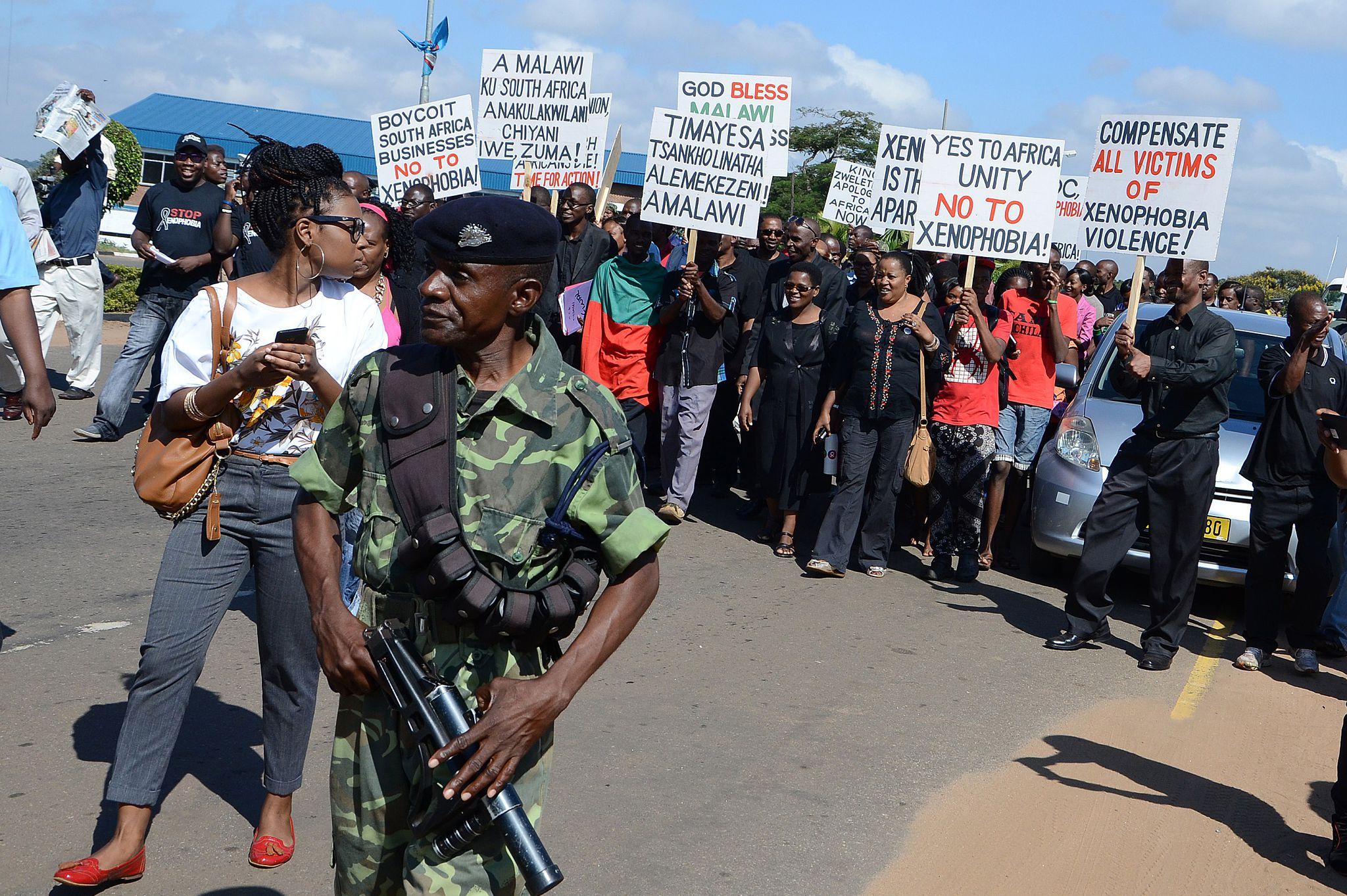
Abstract
The recurrent xenophobic violence in South Africa is conventionally explained either as the moral failing of a particular society or as a problem of border control. This article advances a different argument: that the violence is the visible downstream symptom of a two-sided failure of economic policy across the African continent. On the receiving side, South Africa secured a political transition in 1994 without resolving the economic question, producing structural unemployment and inequality that demand a scapegoat. On the sending side, decades of policy failure. Chaotic land reform and monetary indiscipline in Zimbabwe, commodity dependence and currency collapse in Nigeria, and neopatrimonial governance across much of the region have produced the very migrants who become scapegoats. The two failures interlock into a self-reinforcing trap that corrodes regional integration and weakens Africa’s collective leverage over its own resources. Breaking the circle requires structural transformation and honest public-finance reform on both sides of every border.
1. The Paradox at the heart of the crisis.
Right now, there’s a painful contradiction playing out. In the past, the frontline countries of Southern Africa, such as Zambia, Tanzania, Mozambique, and Angola, stood alongside South Africa’s liberation movements. They offered not just shelter, but also a sense of hope, hosting training camps and absorbing attacks from Pretoria, all while keeping the flame of the anti-apartheid struggle burning when it was nearly snuffed out at home. President Ramaphosa has even admitted that South Africa did not achieve freedom in isolation; many African nations opened their arms and their borders to support those fighters (The Africa Report, 2026).
Fast forward three decades, and the situation has drastically shifted. Nationals from those same supportive countries now find themselves in South Africa facing hostility and rejection. They’re being targeted in neighbourhoods, denied access to healthcare, and are often dismissed with the harsh sentiment to “fix their own countries.” It’s a troubling reminder of the unevenness of solidarity and the complexities of history.
It’s easy to interpret this situation as simply a lack of gratitude or a sign of moral decline. However, that perspective doesn’t really help us understand the root causes. A more insightful approach for those examining the economy would be to consider the underlying structures and forces at play. We need to ask ourselves: what drives the South African individual to lash out, and what pushes the migrant to become a target? This article suggests that the explanation lies on both sides of the border and that the story is ultimately one of failed economic policies. Xenophobia isn’t the actual disease; it’s a symptom of a deeper societal issue.
2. The receiving end: A transition that deferred the economic question.
South Africa’s transition in 1994 marked a significant political achievement, but it fell short of truly transforming the country’s economy. While political power shifted decisively, the economic systems rooted in apartheid largely persisted, creating a complex legacy that is still felt today.
For instance, land ownership remains heavily skewed. A small fraction of the population, primarily white South Africans, continues to control about 72% of farmland. This figure has only slightly decreased from approximately 85% in 1994. The repercussions of this are profound, as the inequalities that stem from such concentrated land ownership contribute to a broader pattern of socio-economic disparity.
As of 2024-2025, the unemployment rate has surged to over 40%, underscoring the pressing need for economic reform. This situation highlights the stark contrast between the political advancements made since 1994 and the persistent economic challenges that many South Africans face, underscoring the ongoing struggle for genuine transformation and equality in the nation.
In a society where opportunity is scarce, scapegoats often emerge. Migrants, who make up about 4% of the population and primarily come from neighbouring countries, are unfairly blamed for issues like joblessness, crime, and overburdened services. Despite clear evidence that they’re not responsible for unemployment or rising crime rates, sentiment against them is growing. Groups like Operation Dudula and the newer March and March have exploited these concerns, while political parties are seizing on this discontent as they prepare for the 2026 local elections.
At the heart of this situation is a policy failure: the transition that could have revitalised the economy never happened. When a society is thriving and full of job opportunities, it doesn’t turn against foreigners in a desperate search for work. Instead, healthy economies foster a sense of unity and shared purpose, not fear and division.
As I highlighted in my previous entry, Joe Slovo’s Sunset Clause addressed the political question without addressing the economic malaise.
3. The sending end: How failed policy manufactures migrants.
If we look closely at the situation, it becomes clear that the factors driving people from other countries to South Africa are deeply rooted in their own circumstances. South Africa may create the environment that attracts migrants, but the countries around it often contribute to this flow through their own missteps and challenges. The individuals crossing the borders aren’t just part of an impersonal wave; rather, they are the direct result of specific choices made by governments in their home countries. Let’s consider a couple of examples that help shed light on this complex reality.
Zimbabwe: the textbook collapse.
No situation illustrates the challenges Zimbabwe faces better than its impact on migration patterns in South Africa. Once a thriving nation, Zimbabwe’s decline stemmed not from mere misfortune but from a series of misguided policies. The fast-track land reform initiated in 2000 resulted in the seizure of commercial farms and their redistribution to inexperienced individuals and political allies. This decision devastated what was once considered the agricultural heart of the region (Cato Institute, 2022).
In an attempt to fund payouts to war veterans, finance a costly military intervention in the Democratic Republic of Congo, and manage a growing deficit, the government resorted to printing money. This led to one of the worst hyperinflations ever recorded, with prices doubling nearly every day by 2008 (Cato Institute, 2022). At the core of this turmoil was neopatrimonialism-a system where the ruling party treated the country as a personal resource (GIS Reports, 2025).
As a result of these policies, millions of Zimbabweans sought to escape their deteriorating homeland in search of a better life, predominantly heading south (Al Jazeera, 2014). Zimbabwe not only struggled to hold onto its citizens; its very policies pushed them away.
Nigeria: the resource curse and the “japa” wave.
Nigeria, the most populous country in Africa, portrays a more nuanced version of a familiar tale. For decades, its reliance on oil revenue, often referred to as the “resource curse”, has resulted in a fragile economy that struggles to diversify and is heavily dependent on imports. This over-reliance has made Nigeria particularly sensitive to fluctuations in oil prices, with dire consequences for its citizens.
Today, the country is grappling with soaring inflation rates exceeding 30%, and the naira has lost more than half of its value since 2022. Official unemployment has reached around 33%, with youth unemployment even higher at over 50% (Businessday NG, 2025). These grim statistics have led to a mass exodus, known as the “japa” wave, derived from the Yoruba word meaning “to flee.” Estimates suggest that more than 2 million Nigerians have left the country between 2020 and 2024, with a notable number of professionals, such as doctors, nurses, and engineers, seeking better opportunities abroad (Businessday NG, 2025).
Migration experts attribute this trend to economic instability, insecurity, and political corruption rather than a mere desire to explore the world (Vanguard, 2025). Tragically, alongside crude oil, Nigeria is exporting its valuable, untapped human potential as its citizens look for more stable and promising futures elsewhere.
Malawi: the reservoir economy and the slow-motion crisis.
Malawi has often been seen as a nation that primarily exists to supply labour, and this has shaped its complex history and economy. The story dates back to the early 20th century, when concerns over the high mortality rates among miners led to a 1913 ban on recruiting workers from Nyasaland (now Malawi). However, the demand for labour soon prompted a reversal of this policy in 1935, leading to formal agreements between the governments of Nyasaland, South Africa, and Southern Rhodesia.
At the heart of this arrangement was the Witwatersrand Native Labour Association, popularly known as “Wenela.” This organisation was essentially designed to streamline the process of sending Malawian migrants to work in South Africa’s gold mines. Wenela operated bus and air services, transporting thousands of miners. By the early 1970s, over 120,000 Malawian men were employed in these mines, making up more than half of Wenela’s workforce.
In this colonial and apartheid context, Malawi was seen not just as a country, but as a vast reservoir of labour, where people were often treated as commodities. This designation had profound implications for the nation and its people, leaving a legacy that continues to influence Malawi’s social and economic landscape today.
After the tragic Francistown air disaster in 1974, when a Wenela flight carrying miners back home to Blantyre crashed, claiming many lives, President Hastings Banda took drastic action. He banned Wenela recruitment, effectively cutting off a significant lifeline for many Malawians who had sought work in South African mines. Consequently, the number of Malawians employed in South Africa plummeted from over 120,000 to almost nothing in just a few years (Dinkelman and Mariotti, 2016). Banda even took pride in stating that he had “killed Wenela.”
However, this decision didn’t truly liberate the labour force; it simply redirected it. Banda’s vision for development relied heavily on large-scale agricultural estates, particularly in tobacco, which meant stifling the economic prospects of smallholder farmers. Rather than having men seeking work in the mines, they were now tied to the estates that demanded their labour. It wasn’t a case of free labour; the focus shifted, but the dependency remained. When the system of estate and smallholder agriculture eventually stagnated, it became evident that the historical trend of migration had only temporarily shifted. In essence, Malawi had been shaped into a nation that sent people away for work, first willingly, then by design, and ultimately by necessity.
The situation we’re facing is quite serious, stemming from a long history of structural issues combined with ongoing policy missteps. From 2024 to 2026, the cracks really began to show. Tobacco, which still accounts for about 40% of our export income, faced a tough time in 2025 when global prices and demand fell short of expectations. This hit our economy hard, leading to a significant trade deficit of around US$2.44 billion in the first eleven months, as we saw a sharp rise in imports for fuel, fertilisers, and food.
Behind these numbers lies a profound public finance crisis. The fiscal deficit reached about 10% of our GDP, while public debt soared to between 86% and 88% of GDP, some of the highest levels in our region. It’s alarming to note that a staggering 46% of our domestic revenue is now consumed by interest payments alone. Officially, we’re in debt distress, and our IMF Extended Credit Facility lapsed in May 2025 without any successful reviews being completed. This is more than just statistics; it reflects the real struggles our people and economy are facing.
Monetary management has exacerbated Malawi’s economic challenges. Instead of letting the kwacha find its natural value, the authorities fixed the official exchange rate at around K1,751 to the dollar starting in 2024. This move effectively nullified the benefits of the 44% devaluation that had occurred in November 2023 and drove many transactions into a booming parallel market. What this created was a situation of “stability without dollars”, where a misleading exchange rate masked the reality of empty store shelves and idle factories.
A 2025 business survey highlighted the severity of the situation: about 75% of companies cited foreign exchange shortages as one of their biggest obstacles, and nearly half reported operating at less than 50% of their capacity. With the economy barely growing at under 2% while the population continues to expand rapidly, real incomes are declining, and job opportunities are shrinking.
To make matters worse, the election year brought about increased government spending, periodic import bans, and a costly input-subsidy program that seems untouchable despite its financial burden. This has led to a situation where scarce public resources are directed towards short-term political survival rather than fostering meaningful, long-term economic growth.
While it’s important to acknowledge that Malawi faces genuine challenges, such as being landlocked, which raises trade costs, the constant threat of climate shocks, and a recent decline in donor aid, these issues only deepen the existing crisis rather than create it.
The Affordable Inputs Programme (AIP) stands out as a significant initiative in Malawi, launched in 2020 to replace the previous Farm Input Subsidy Programme (FISP). It’s a telling example of how some well-intentioned policies miss the mark. When the AIP started, it consumed around MWK 160 billion, nearly US$199 million, accounting for more than 45% of the entire agriculture budget. However, it only managed to boost maize production by about 300,000 tonnes. The IMF had cautioned early on that targeted cash transfers could yield better results (Devex, 2022).
Fast-forward five seasons, and instead of reducing food insecurity, the number of people facing hunger in Malawi has increased. By 2024, the government even began structuring contracts with AIP suppliers in kwacha to alleviate some of the foreign-exchange pressure on these suppliers (AllAfrica, 2024).
What’s perhaps most revealing is a national survey conducted in 2025, which found that 71% of Malawians felt the program favoured certain individuals, political parties, or special interests over the general population. This perception echoes the telltale signs of pork-barrel spending (Afrobarometer, 2025). The program’s financial scale and the impact of currency devaluation on its effectiveness are documented in Table 1 and Figure 1, illustrating the ongoing challenges within the agricultural sector.
Table 1. Farm-input subsidy allocations in Malawi, FISP and AIP (selected years)
| Fiscal year | Programme | Allocation (MWK bn) | Approx. US$ m | Households targeted |
| 2005/06 | FISP | 4.5 | — | — |
| 2019/20 | FISP | 35.5 | — | — |
| 2020/21 | AIP | 160 | ~199 | near-universal |
| 2022/23 | AIP | 109 | — | 2.5 m |
| 2023/24 | AIP | 117.7 | — | 1.5 m |
| 2024/25 | AIP | 161 | ~92 | 1 054 945 |
| 2025/26 | AIP | 131.6 | ~75 | ~1.1 m |
Sources: FISP figures from agricultural-policy literature citing Kulinji (IFPRI, n.d.); Devex (2022) for 2020/21; ActionAid Malawi (2024) for 2022/23 and 2023/24; AllAfrica (2024) and Nation Online (2025) for 2024/25 and 2025/26. Figures are budget allocations; actual outlays have at times exceeded them — the Office of the Ombudsman (2024) put combined actual AIP investment for the 2022/23 and 2023/24 seasons at about MWK 261.1 billion. US$ conversions use prevailing official exchange rates; the steep fall in dollar value despite broadly stable kwacha allocations reflects the currency’s devaluation — itself a measure of the crisis.

Figure 1. AIP allocations in kwacha versus their approximate US-dollar value, 2020/21–2025/26.
The kwacha allocation oscillates around K110–161 billion, yet the programme’s value in dollars — the currency in which the fertiliser it buys must ultimately be imported — fell from about US$199 million in 2020/21 to roughly US$75 million in 2025/26. US$ figures are approximate conversions at prevailing official exchange rates (2020/21 from Devex, 2022; later years computed at the official rate, which itself understates scarcity given the parallel-market premium). The collapse in real value, not the nominal kwacha figure, is the true measure of what the subsidy now delivers.
The economic context of this subsidy is concerning, as shown in Table 2. We’re looking at an economy that’s struggling to grow, with inflation rates among the highest in the region. It’s been facing persistent double-digit deficits, public debt nearing 90% of GDP, and, at one point in 2025, a foreign reserve buffer of just about a week’s worth of imports. These are not just signs of a temporary setback; they point to years of overextended public finances that are in serious need of attention.
Table 2. Malawi headline macro-fiscal indicators, 2023–2025
| Indicator | 2023 | 2024 | 2025 |
| Real GDP growth (%) | 1.9 | 1.8 | ~3.0 (proj.) |
| Inflation, period average (%) | 28.7 | 32.3 | 28.4 |
| Fiscal deficit (% of GDP) | 10.1 | 9.1 | 8.4 |
| Public debt (% of GDP) | ≈81 | 86–88 | ≈88 |
| Gross official reserves (months’ import cover) | 0.96 | 0.66 | 0.28* |
Sources: AfDB (2025) for GDP growth and 2023–24 inflation; World Bank (2026) for 2025 inflation and the 2024–25 fiscal-deficit path; IMF (2025) for total public debt of about 88% of GDP at end-2024; Reserve Bank of Malawi figures reported by The Times (2026) for gross official reserves. *Gross official reserves reached a historic low of about US$70.3 million (0.28 months) in August 2025; they understate total economy-wide reserves, which the World Bank placed slightly above two months’ cover in 2025. Definitions and base years (calendar versus fiscal) differ across sources, so values vary modestly.
Malawi’s situation is different from the explosive crises seen in Zimbabwe or the oil-related upheavals in Nigeria. Instead, it’s a quiet, gradual failure that has unfolded over decades. This isn’t just about one economic setback; it reflects a long-standing struggle to industrialise, diversify the economy beyond just tobacco, and establish the fiscal discipline necessary for growth.
The result? Many Malawians are not fleeing a sudden disaster but rather a persistent lack of opportunities. With nearly half of all Africans considering emigration and many from the SADC region heading to South Africa, the outflow continues. It’s a continuation of the journey that their ancestors took, but now they face the harsh realities of xenophobia as they arrive in search of a better life.
It was telling that during the violent incidents in 2026, Malawi’s leaders sought to meet with South Africa’s President Ramaphosa to advocate for the safety of their citizens living there. The underlying problem is that Malawi’s economy has not been able to harness the potential of its people, leaving a growing number of them seeking work and hope elsewhere.
The common grammar of failure.
In many cases, we see a recurring pattern that highlights significant challenges faced by countries. They often rely heavily on a narrow range of commodities, leading to fiscal mismanagement, including excessive money printing or unsustainable debt accumulation. This reliance creates institutions that prioritise benefiting a select few over fostering genuine development for all. As a result, these countries struggle to create the jobs that could keep their citizens from seeking opportunities elsewhere.
Take Mozambique as an example; the ongoing hidden-debt scandal and the insurgency in Cabo Delgado have critically undermined public finances, driving people to leave. Similarly, the Democratic Republic of Congo is rich in minerals yet grapples with state collapse, further pushing its citizens to seek better lives abroad. This phenomenon isn’t random; it reflects the broader economic challenges many African nations face. It’s essential to understand that these issues stem from choices made in governance and policy, rather than from uncontrollable circumstances.
4. The structural defence: It is not only bad governance.
To be intellectually honest, we need to consider the counterargument. Blaming only African governments for the continent’s challenges would amount to repeating the scapegoating this article seeks to address. The policy failures we witness today didn’t arise in a vacuum; they exist within a broader external context that no single government created. Historically, colonial economies were structured to be heavily reliant on exporting raw materials while importing manufactured goods, a dependency that persisted even after independence.
The structural adjustment programs of the 1980s and 1990s, such as Zimbabwe’s ESAP, often made matters worse, leading to further deindustrialisation and social distress before any real growth could be seen. We’re also dealing with volatile trade conditions, a debt system that worsens every time there’s a global economic shock, and illicit financial flows that take away more than is given in aid. All of this limits governments’ ability to create effective policies.
So, the conclusion is that African economic outcomes stem from both real policy failures and a legacy of structural disadvantages shaped by external factors. We can’t fully understand the situation through just one lens; both explanations are necessary and are often used to deflect attention from the other.
5. The vicious circle.
The two sides of this argument come together in a way that creates a troubling cycle. Poor economic policies in certain countries lead to an increase in the number of people seeking to migrate for better opportunities. They often head toward the largest economy in the region, hoping for a fresh start. However, that economy, which hasn’t adapted to the influx of new workers, struggles to accommodate them and often reacts negatively. This response can lead to violence, breaking down diplomatic relations and causing economic backlash, like when Nigerians targeted South African businesses or when lawmakers in Nigeria considered banning South African companies such as MTN from operating there in 2026.
This clash not only damages relationships but also undermines a crucial goal: boosting trade and integration among African nations, which is essential to moving beyond reliance on raw commodities. As this integration weakens, the issues that caused the initial economic failures become even more entrenched, creating a vicious cycle. So, the rise of xenophobia isn’t just a moral issue; it’s also a detrimental economic one that threatens the very market that could provide opportunities for everyone involved.
6. The geopolitics of disunity.
It’s easy to wonder if outside forces are trying to create disunity in Africa for their own gain. However, when we break it down, it appears the issues stem from local problems rather than foreign manipulation. There’s no solid evidence that the violence and conflict are directed by anyone outside the continent; the players involved are all from within, and the root causes often stem from local unemployment and political manoeuvring.
On a broader scale, the structural issues remain significant. A continent that lacks unity struggles to negotiate effectively. This disunity directly threatens the African Continental Free Trade Area, which aims to connect a market of 1.3 billion people. But when fear and xenophobia take hold, they erode the trust needed for cross-border collaboration. Instead of working together to leverage their vast resources and potential, African nations often end up competing against each other, exacerbated by ineffective policies.
This competition weakens their bargaining power and ultimately benefits those who prefer fragmented economies, making it easier for external interests to exploit resources without facing strong resistance. Instead of asking “who is behind the chaos,” it might be more productive to ask “who benefits from this division?” The answer often points to external capital and a system that keeps African nations reliant on others.
7. Breaking the circle.
The issue at hand reflects a deep, shared failure in our economic policies, and simply putting up border walls or pointing fingers won’t solve it. We need to address the underlying structures that are affecting communities on both sides of every border. It’s not just about criticism or separation; it’s about understanding and fixing the root causes together.
- Structural transformation over commodity dependence: deliberate industrial policy, value addition before export, and investment in productive capacity, so that economies generate jobs rather than rents.
- Sound public finance and monetary discipline: the unglamorous foundation. Credible budgets, independent monetary institutions, and an end to deficit financing through the printing press are what separate Botswana’s trajectory from Zimbabwe’s.
- Deepening intra-African trade: making the AfCFTA real, so that surplus labour and goods move within a growing continental market rather than piling pressure onto a single destination.
- Managed regional labour mobility: honest SADC and continental frameworks that treat migration as a feature to be managed, not a crime to be punished, removing the informality that breeds resentment.
- Confronting the economic question in South Africa: because no migration policy will quiet a society that has never delivered the economic dignity its liberation promised.
None of this is easy, quick, or cheap, but every action taken aims to address the root issues rather than just the surface problems. Each step we take helps to build a stronger sense of unity, which is essential for the continent’s influence and negotiating power.
8. Conclusion.
In South Africa, the image of a man setting fire to a shop owned by a Mozambican speaks volumes about the deeper, troubling realities faced by many. Similarly, the Nigerian doctor boarding a flight to Manchester embodies the desperation of those seeking better opportunities away from home. Both individuals are caught in the tangled web of the African political landscape, which often prioritises power over people’s well-being.
While the violence erupting on South African streets captures headlines, it is a stark reminder of a broader crisis, a crisis where decisions made by those in power have failed to translate into real prosperity for everyday citizens. These are places where governments have taken on debts they could never repay, seized resources without the means to manage them, and sent citizens abroad without providing them with jobs at home. The struggles of these individuals reflect a much larger narrative about missed opportunities and the ongoing fight for survival in a system that has long overlooked the needs of its people.
The frontline states had a profound understanding that no African nation can truly be free while its neighbours are struggling. This insight extends to the economy as well: an African economy can’t be secure if those around it are faltering. Economic collapse doesn’t respect borders; it seeps into neighbouring areas, creating turmoil that undermines the unity Africa needs to thrive. To break this cycle, we need to prioritise economic policy with the same urgency that past generations approached political freedom. It’s not just about enforcing borders; it’s about building a strong, interconnected economic foundation across the continent.
References
ActionAid Malawi (2024) 2023–24 agriculture sector budget analysis: policy brief. Lilongwe: ActionAid Malawi. Available at: https://malawi.actionaid.org (Accessed: 7 June 2026).
Africa Center (2025) African migration trends to watch in 2025. Washington, DC: Africa Center for Strategic Studies. Available at: https://africacenter.org (Accessed: 7 June 2026).
Africa Check (2019) Frequently asked questions about land ownership and demand in South Africa. Available at: https://africacheck.org (Accessed: 7 June 2026).
African Development Bank (AfDB) (2025) Malawi economic outlook. Abidjan: AfDB. Available at: https://www.afdb.org (Accessed: 7 June 2026).
Afrobarometer (2025) AD946: Amid growing food insecurity, Malawians favour alternatives to the Affordable Inputs Programme. 11 February. Available at: https://www.afrobarometer.org (Accessed: 7 June 2026).
AgriSA via Bloomberg (2017) ‘Whites own 73% of South Africa’s farming land, City Press says’, Bloomberg, 29 October. Available at: https://www.bloomberg.com (Accessed: 7 June 2026).
Al Jazeera (2014) ‘Zimbabwe turns 34, but struggles economically’, Al Jazeera, 18 April. Available at: https://www.aljazeera.com (Accessed: 7 June 2026).
AllAfrica (2024) ‘Malawi: Govt to pay AIP suppliers in kwacha as part of dodging forex challenges’, AllAfrica, 12 August. Available at: https://allafrica.com (Accessed: 7 June 2026).
Botswana Daily News (n.d.) ‘Resilience, fragility, tragedy define Ftown’. Gaborone: Department of Information Services. Available at: https://dailynews.gov.bw (Accessed: 7 June 2026).
Businessday NG (2025) ‘Turning Nigeria’s migration wave into an economic asset’, Businessday, 2 December. Available at: https://businessday.ng (Accessed: 7 June 2026).
Cato Institute (2022) Why Mugabe’s land reforms were so disastrous. Washington, DC: Cato Institute. Available at: https://www.cato.org (Accessed: 7 June 2026).
Daily Maverick (2026) ‘How South Africa’s xenophobic online machine was rebooted in 2026’, Daily Maverick, 1 June. Available at: https://www.dailymaverick.co.za (Accessed: 7 June 2026).
Devex (2022) ‘Can Malawi’s agricultural inputs program improve food security?’, Devex, 9 February. Available at: https://www.devex.com (Accessed: 7 June 2026).
Dinkelman, T. and Mariotti, M. (2016) ‘The long-run effects of labor migration on human capital formation in communities of origin’, American Economic Journal: Applied Economics, 8(4), pp. 1–35.
GBC Ghana Online (2026) ‘Nigeria establishes crisis unit to protect citizens from xenophobic attacks in South Africa’. Available at: https://www.gbcghanaonline.com (Accessed: 7 June 2026).
GIS Reports (2025) Deepening dysfunction in Zimbabwe. Available at: https://www.gisreportsonline.com (Accessed: 7 June 2026).
Human Rights Watch (2026) ‘South Africa: New waves of xenophobic attacks’, 20 May. Available at: https://www.hrw.org (Accessed: 7 June 2026).
IFPRI (n.d.) Farmers’ perspective on the implementation of the Affordable Inputs Programme. Washington, DC: International Food Policy Research Institute. Available at: https://cgspace.cgiar.org (Accessed: 7 June 2026).
International Monetary Fund (IMF) (2025) Malawi: 2025 Article IV consultation, IMF Country Report No. 25/226. Washington, DC: IMF. Available at: https://www.imf.org (Accessed: 7 June 2026).
Kydd, J.G. and Christiansen, R.E. (1982) ‘Structural change in Malawi since independence: consequences of a development strategy based on large-scale agriculture’, World Development, 10(5), pp. 355–375.
Malawi Confederation of Chambers of Commerce and Industry (MCCCI) (2026) 2025 Annual Economic Performance and Business Environment Review. Reported via AllAfrica, 5 January. Available at: https://allafrica.com (Accessed: 7 June 2026).
Nation Online (2025) ‘AIP in limbo’, Nation Online, 28 September. Available at: https://mwnation.com (Accessed: 7 June 2026).
Nkhoma, B.G. (n.d.) ‘Competition for Malawian labourers: Wenela and Mthandizi’. Mzuzu: Department of History, Mzuzu University.
Nyasa Times (2025) ‘2025 year in review: the year Malawi’s economy buckled under debt, inflation and hunger’, Malawi Nyasa Times, 24 December. Available at: https://www.nyasatimes.com (Accessed: 7 June 2026).
Office of the Ombudsman (Malawi) (2024) A report on systemic investigations on the Affordable Inputs Programme implementation. Lilongwe: Office of the Ombudsman. Available at: https://www.ombudsmanmalawi.org (Accessed: 7 June 2026).
Sherif, K. (2023) ‘Africa’s japa is accelerating’. Available at: https://www.ksherif.com (Accessed: 7 June 2026).
Statistics South Africa (Stats SA) (2024) Migration profile report for South Africa: a country profile 2023. Pretoria: Stats SA. Available at: https://www.statssa.gov.za (Accessed: 7 June 2026).
The Africa Report (2026) ‘Ramaphosa says “no place” for xenophobia in South Africa after attacks’. Available at: https://www.theafricareport.com (Accessed: 7 June 2026).
The Times (2026) ‘Forex reserves hit lowest level’, The Times (Malawi), 16 April. Available at: https://times.mw (Accessed: 7 June 2026).
Vanguard (2025) ‘Brain drain crisis: Migration expert reveals root causes, policy failures’, Vanguard, 3 July. Available at: https://www.vanguardngr.com (Accessed: 7 June 2026).
World Bank (2026) Malawi country overview. Washington, DC: World Bank. Available at: https://www.worldbank.org (Accessed: 7 June 2026).
World Bank via AllAfrica (2025) ‘Malawi’s economy in deep trouble, urgent reforms needed — World Bank warns’, AllAfrica, 14 July. Available at: https://allafrica.com (Accessed: 7 June 2026).
Leave a Reply