Introduction
Malawi’s journey since gaining independence presents a compelling story of how economic changes and the push for democracy can shape a nation. Starting in the 1980s, Malawi has undergone significant market-driven reforms, guided by programs from the IMF and the World Bank, aimed at bolstering the economy. Simultaneously, the country made a pivotal shift from a one-party system under President Hastings Kamuzu Banda to a multi-party democracy in 1994.
This post examines how neoliberal economic policies and donor-led initiatives have affected Malawi’s political landscape and the development of its democratic institutions. It outlines a timeline of major reforms and key players, examining their social and economic effects, including poverty levels, inequality, access to services, and investment opportunities. The analysis also examines political outcomes, including the quality of governance, transparency, accountability, and civic engagement.
It highlights specific examples from Banda’s rule, the transition to democracy in the early 1990s, and the influence of international donors on elections and policies, to demonstrate the complexities and connections between economic liberalisation and the advancement of democracy in Malawi. This narrative not only reflects on the challenges but also the potential for growth and resilience in a country navigating the delicate balance between market forces and democratic ideals.
Historical Background: Banda’s Regime and the Road to Multiparty Democracy
When Malawi gained independence in 1964, it embarked on a journey under President Banda that sought to blend economic growth with strong government oversight. Banda believed in a developmental state model, which meant that while capitalist ventures were encouraged, the government maintained significant control over the economy. This led to the establishment of numerous state-owned enterprises (SOEs) and parastatals, totalling 121 by the early 1990s. These entities were present in crucial sectors, with the government actively intervening in markets through mechanisms such as marketing boards, such as the Agricultural Development and Marketing Corporation (ADMARC), and implementing price controls and protective trade measures. Initially, this approach seemed to pay off, as the government made strides toward improving citizens’ living conditions. Banda often expressed his desire for every Malawian to have access to “food, clothing, and shelter,” reflecting a vision for a better life. Nevertheless, the stability of this model began to unravel in the late 1970s and early 1980s. A severe economic crisis emerged, exacerbated by external factors like the 1979 oil price surge, falling tobacco prices (a key export), and regional conflicts disrupting trade routes. Coupled with growing inefficiencies in the state-run enterprises, the country found itself in a precarious situation. By 1981, the fiscal deficit had soared to 10% of GDP, and foreign debt grew massively, bringing Malawi to a critical juncture.
Introduction of Structural Adjustment (1981): In the face of significant economic challenges, Malawi sought help from the International Monetary Fund (IMF) and the World Bank. In 1981, the Banda government launched its first Structural Adjustment Program (SAP), marking a pivotal shift towards neoliberal economic policies. Throughout the 1980s, a series of SAPs supported by these international institutions was implemented, focusing on austerity measures and market liberalisation. This meant that the government started to privatise or reform state enterprises, eliminated subsidies and price controls, liberalised trade, devalued the currency, and tightened fiscal policies. For instance, parastatal reforms kicked off in 1981, agricultural markets were deregulated as price controls were lifted and restrictions on cash crops eased, and many state-owned companies were set for privatisation. These sweeping changes represented a significant departure from Malawi’s previous model of state control, effectively ushering in the country’s neoliberal economic era.
Authoritarian Politics vs Economic Liberalisation: It’s essential to recognise that the economic changes during the 1980s happened in the context of an authoritarian government led by President Banda. He ruled with an iron fist, banning opposition and suppressing civil liberties. This meant that while the economy was undergoing liberalisation, the political landscape remained tightly controlled. Interestingly, despite recommendations from the IMF and the World Bank, Western nations largely overlooked Banda’s oppressive regime during the Cold War. However, by the early 1990s, things began to shift. The economic struggles faced by the population, worsened by the austerity measures of the Structural Adjustment Programs, led to growing discontent. A significant moment came in 1992 when Catholic bishops boldly spoke out against Banda’s abuses in a pastoral letter, which really resonated with the public and increased the appetite for change. At the same time, international pressure was mounting. Major donors such as the US, UK, and EU countries decided to freeze non-humanitarian aid to Malawi, making it clear that they would link any future aid to improvements in human rights and political reforms. Given that foreign aid accounted for about 30% of Malawi’s GDP at the time, this decision hit the regime hard. Under this mix of internal dissatisfaction and external pressure, Banda ultimately agreed to hold a national referendum to address the issue of one-party rule. This marked a significant turning point in Malawi’s political journey.
Transition to Multiparty Democracy (1993–1994): In June 1993, the people of Malawi made a historic decision by voting overwhelmingly to end the one-party system that had dominated their country for decades. I was in Form 3 at Nkhata-bay Secondary School and offered my services as an electoral monitor at Vizara polling station. This pivotal moment led to a change in the constitution, allowing for multiparty politics, and it didn’t take long for the long-standing rule of President Hastings Kamuzu Banda to crumble. The first genuine multiparty elections took place in 1994, resulting in the election of President Bakili Muluzi and his United Democratic Front (UDF). This was a significant turning point for Malawi, marking the dawn of democracy in the nation. What’s particularly interesting about Malawi’s transition is how it was influenced by the international community. Western nations supported and celebrated this shift toward democracy and, as a result, resumed aid to Malawi shortly after the elections. In fact, foreign aid surged to nearly 40% of the country’s GDP in 1994. This influx of support highlighted the international community’s commitment to helping Malawi stabilise and nurture its emerging democratic values.
Neoliberal Reform Trajectory (1980s–2000s): Policies and Key Actors
After the 1994 change of government, Malawi continued to embrace neoliberal economic reforms, seamlessly transitioning into this democratic era. Although the names of these programs shifted from Structural Adjustment Programs (SAPs) to Fiscal Restructuring and Deregulation Programs in the late ’90s, and later to the IMF’s Poverty Reduction and Growth Facility (PRGF) in the 2000s, along with various other credit facilities, the fundamental approach remained unchanged. Leaders such as President Muluzi, who served from 1994 to 2004, and President Bingu wa Mutharika, in power from 2004 to 2012, largely kept to this neoliberal framework, although there were moments of pushback and slight deviations along the way. Key reforms and influential figures defined this important period in Malawi’s economic history.
- Privatisation of State Enterprises: In the 1980s, Malawi laid the foundation for significant economic changes, but it was in the 1990s that the country accelerated its privatisation efforts. In 1996, the government established a dedicated Privatisation Commission to oversee the sale or restructuring of many state-owned enterprises (SOEs). By 2002, a notable milestone was reached with the privatisation of at least 53 SOEs, while many others were either shut down or reformed to improve efficiency. This shift was particularly impactful in key sectors such as banking, telecommunications, airlines, and agricultural marketing, where state-owned companies were either sold off or opened to private competition, often with support from international donors.
- Agricultural Market Liberalisation: Agriculture is truly the lifeblood of Malawi, providing jobs for around 80% of the population. However, major reforms guided by the IMF and World Bank led to significant changes in the agricultural landscape. The government decided to remove agricultural subsidies and price controls that had been in place since the era of President Banda. The state marketing board, ADMARC, was transformed into a more commercially driven entity, while smallholder credit schemes collapsed in the 1990s. One significant change came in 1995 with the repeal of the Special Crops Act, which had previously limited small farmers’ ability to grow certain cash crops. This repeal allowed more competition in the tobacco industry, but it also meant that subsistence farmers lost some of the protections they had relied on. While these reforms aimed to improve the agricultural sector’s efficiency, they also led to increased instability. For example, after the price controls were lifted, the price of maize, the staple food for many, skyrocketed by 400% between 2001 and 2002. This dramatic increase contributed to one of the worst famines in decades, highlighting the vulnerabilities that came with these liberalising policies. It’s a complex situation, balancing the push for efficiency with the need to protect the livelihoods of those who rely on farming for their survival.
- Fiscal Austerity and Deregulation: The neoliberal approach during the 1980s and 1990s focused on managing deficits and keeping inflation in check. In Malawi, this meant making tough decisions, such as repeatedly devaluing the kwacha to balance foreign financial obligations. By 1994, the country even decided to float its currency, allowing market forces to dictate its value. Interest rates also underwent significant changes around this time. Instead of the government controlling them directly, rates were left to be determined by the market by the early 1990s. Under the guidance of international donors, the Malawian government took further steps, including cutting or freezing public-sector wages, reducing the size of the civil service, and scaling back public spending across various sectors. These reforms were often necessary to secure loans from institutions such as the IMF and the World Bank. However, these measures were not without consequences. They had a direct impact on people’s daily lives, affecting the cost of living and the availability of public services. The political landscape was influenced as citizens felt the pinch of these policies, leading to tensions and challenges in governance.
- Trade Liberalisation: In 1988, Malawi took significant steps to open its economy by launching the Industrial and Trade Policy Adjustment Program. This initiative abolished numerous import quotas and reduced tariffs, enabling the country to engage more effectively in global trade. Over the following years, Malawi signed on to various regional and multilateral free trade agreements, including the SADC and COMESA rounds, which further lowered trade barriers. The goal of these efforts was to encourage export-driven growth and attract foreign investment by demonstrating a commitment to an open economy.
- Key Actors – Donors and Leaders: The International Monetary Fund (IMF) and World Bank played key roles in shaping Malawi’s economic reforms, often making financial assistance contingent on strict conditions. Western countries, including the UK, USA, and EU, were significant donors, pushing Malawi to adopt the so-called “Washington Consensus” policies. In the early years, President Banda implemented Structural Adjustment Programs (SAPs) out of necessity, even if it meant stepping back from some of his own statist policies. After 1994, President Muluzi’s government relied heavily on aid from these donors and ensured alignment with the IMF’s requirements. However, issues like administrative capacity and corruption sometimes caused Malawi to fall short of meeting these agreements. When President Bingu wa Mutharika, a former World Bank economist, took over, he initially continued the trend of liberalisation and received praise from donors for driving economic growth in the mid-2000s. Yet, he also diverged from strict neoliberal guidelines by introducing a widely recognised agricultural subsidy program between 2005 and 2006. This program reinstated subsidies on fertilisers and seeds, reminiscent of Banda’s past approach, despite IMF recommendations against such measures. This initiative not only ended a famine but also created a surplus of maize, gaining popular support while eventually securing donor backing as they helped fund it. This illustrated the tricky balancing act between local leadership and external financial institutions. However, tensions grew in 2011 when Bingu refused to devalue the currency and started to show increasingly authoritarian tendencies. This clash led to donor frustrations and subsequent aid suspensions, contributing to a significant economic crisis. His successor, President Joyce Banda, took office in 2012 and quickly shifted back to a neoliberal stance, implementing a considerable currency devaluation just weeks into her term to restore trust with donors. These developments show that, while Malawi’s economic policies largely leaned toward neoliberalism, its leaders at times pushed back, seeking to assert their policy independence or respond to their people’s needs.
Aid Dependence and Policy Autonomy: A defining feature of Malawi’s neoliberal era is its extraordinary dependence on foreign aid. The embrace of liberal economic policies was rewarded by donors with increased aid inflows – on average, net Official Development Assistance (ODA) was about 19% of Malawi’s GDP from 1981 to 2019, an unusually high level. At key junctures, aid peaked dramatically (e.g. 39.9% of GDP in 1994 amid the democratic transition). This aid dependence has been a double-edged sword: it has provided vital budgetary support and foreign exchange, but it has also given external actors significant leverage over Malawi’s policy choices. Reforms were often negotiated in Washington or donor roundtables as much as in Malawi’s Parliament. Indeed, as one study noted, much of Malawi’s aid in the 2000s was provided as grants and budget support that bypassed parliamentary approval, with donor dialogue occurring primarily with the Ministry of Finance and the executive branch. This dynamic raises questions about the sovereignty and democratic accountability of policy decisions – an issue we will return to when assessing political outcomes.
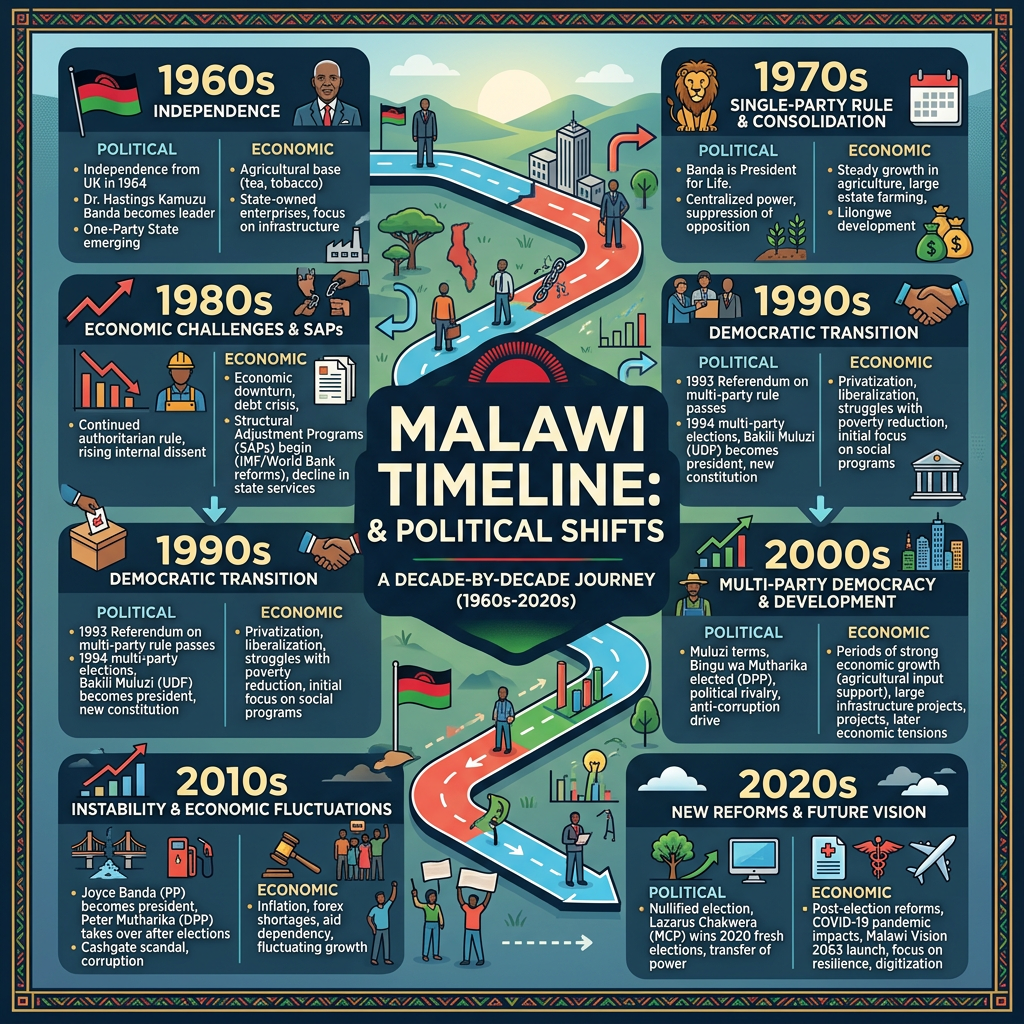
(Table 1 below summarizes some of the key economic reforms and political events in Malawi since the 1980s, illustrating the timeline of neoliberal policy adoption and its intersection with political change.)
| Year | Economic Reform/Event | Political Context |
| 1981 | First IMF/World Bank Structural Adjustment Program begins (currency devaluation, spending cuts, parastatal reforms). | Banda’s one-party regime adopts austerity under donor pressure (no democratic input). |
| 1984–89 | Ongoing SAPs: Privatization starts (first sales of state enterprises in 1984); price controls on food and farm inputs removed; multiple devaluations of the kwacha. | Authoritarian rule continues; economic hardships (rising prices, shortages) fuel quiet discontent. No opposition allowed publicly. |
| 1988 | Trade Policy Adjustment Program eliminates import quotas, cuts tariffs. | – (Political status quo under Banda.) |
| 1992 | Severe drought and economic crisis. Donors freeze aid (except relief) due to Banda’s human rights abuses. | Outbreak of pro-democracy protests; Catholic bishops’ letter sparks open criticism of regime. |
| 1993 | – | National Referendum ends one-party rule (Malawians vote for multiparty democracy). Banda agrees to transition under intense internal and external pressure. |
| 1994 | New government launches further liberalization: kwacha floated (market-determined exchange rate); more SOEs slated for privatization (Privatisation Commission formed 1996). | First multiparty elections – President Muluzi (UDF) elected. Free Primary Education policy introduced by the democratic government (abolishing school fees) as a social reform. |
| 1995–98 | Special Crops Act repealed (1995) – smallholders allowed to grow/export tobacco; Enhanced SAPs and Fiscal Deregulation programs underway. Major devaluation (~62%) in 1998 to stabilize economy. | Democratic governance taking root (new Constitution, independent media emerging). However, corruption scandals and economic difficulties (e.g. 1998 famine threat) test the new government. |
| 2000–2004 | Shift to IMF Poverty Reduction and Growth Facility (PRGF). HIPC debt relief process (Malawi reaches decision point in early 2000s). 2001–02 Food Crisis: Market reforms backfire – maize reserves were sold on IMF advice, contributing to a famine. | President Muluzi faces unrest over famine and plans a controversial third-term bid (ultimately quashed in 2002 amid public and donor opposition). 2004 elections bring Bingu wa Mutharika (UDF/DPP) to power. |
| 2005–2006 | Reversal on farm subsidies: President Bingu launches the Farm Input Subsidy Program (FISP) to support small farmers (in defiance of donor orthodoxy). Leads to record maize harvests and an end to famine conditions. Donors cautiously endorse results. | Bingu’s bold policy is popular domestically, bolstering his and Malawi’s image as a success story in food security. Governance: some improvements in public financial management as donors fund capacity-building. |
| 2011 | Economic governance crisis: Bingu refuses the IMF’s prescription to devalue the currency, leading to acute fuel/forex shortages. Donors respond by cutting aid (budget support suspended). | Political crackdown: Protests over the economy and governance met with repression; at least 18 demonstrators killed by police. Growing authoritarianism (media censorship, NGO harassment) under Bingu’s second term draws widespread criticism. |
| 2012–2013 | After Bingu’s sudden death (Apr 2012), Joyce Banda became president and swiftly devalued the kwacha by ~50% to re-engage with the IMF. Donors restore aid but insist on reforms. Late 2013, a massive “Cashgate” corruption scandal (theft of public funds) is exposed. | Joyce Banda’s reformist stance (currency float, IMF programs) wins donor praise but contributes to domestic inflation and public discontent. Cashgate erodes trust in government and prompts donors to again freeze direct budget support. |
| 2014–2019 | IMF Extended Credit Facility programs continue, emphasising fiscal discipline. With direct budget aid curtailed post-Cashgate, Malawi struggles with budget gaps. FDI remains low despite liberal policies (e.g. only $55 million FDI in 2019). | Democratic continuity: Peter Mutharika (Bingu’s brother, DPP) elected in 2014. Governance is stable but marred by ongoing corruption and patronage. 2019 election results are disputed; mass protests and a historic Constitutional Court ruling in 2020 annulled the election, citing irregularities – a sign of judicial independence. |
| 2020–2021 | New IMF programs were negotiated to stabilise the economy as debt rises. COVID-19 pandemic impacts the economy, requiring donor assistance. | Political turnover: Opposition leader Lazarus Chakwera wins the court-ordered re-run of the 2020 election, marking the first opposition victory since 1994. Democratic institutions (the electoral commission, the courts) show resilience, but public expectations for economic change remain high. |
Table 1: Timeline of major neoliberal economic reforms and political developments in Malawi, 1981–2021.
Social and Economic Outcomes of Neoliberal Reforms
The sweep of neoliberal policies since the 1980s has yielded mixed economic results for Malawi. On one hand, markets have been liberalised, and macroeconomic stability has been intermittently achieved; on the other hand, poverty, inequality, and underdevelopment remain deeply entrenched. This section examines socio-economic outcomes across growth, poverty/inequality, public services, and investment.
- Economic Growth and Structure: Neoliberal theory predicted that privatisation, deregulation, and openness would unleash growth. In Malawi, however, growth has been modest and inconsistent. Studies find that orthodox neoliberal policies failed to catalyse high growth in the Malawian context. Agriculture (especially tobacco exports) remains the dominant sector, with limited diversification. There were periods of relative success – for example, after the mid-2000s subsidy-driven agricultural boom, GDP growth exceeded 6% for a few years – but these were not sustained. By the 2010s, growth slowed amid recurrent fiscal and climate shocks. Economic management under the neoliberal regime often prioritised inflation and debt metrics over developmental expansion, and indeed Malawi has periodically had to abandon expansionary policies under IMF pressure (e.g., abandoning Bingu’s growth-oriented spending plans after 2011). The structure of the economy saw some shifts: the withdrawal of the state opened space for a nascent private sector, but Malawi’s private sector remains shallow, constrained by poor infrastructure and the small domestic market. Crucially, promised large inflows of Foreign Direct Investment (FDI) largely failed to materialise. Even after liberalising investment regulations, Malawi has attracted minimal FDI compared to neighbouring countries. For instance, in 2019, Malawi’s FDI inflows were only $55 million, dwarfed by Mozambique’s $3.5 billion and Zambia’s $1.2 billion that year. A recent analysis notes that Malawi’s fundamentals (landlocked geography, low per capita income, limited investor-ready projects) have kept investors away despite policy reforms. In short, market openness alone was not enough to overcome structural disadvantages.
- Poverty and Inequality: Malawi remains one of the world’s poorest countries. Decades of neoliberal reform have not eradicated mass poverty – in fact, poverty initially worsened in the 1990s. A UN report in 1993 (on the eve of democracy) already found “deep and pervasive poverty”. By 1998, a study showed 65% of Malawians lived below the poverty line, and most were chronically food insecure. This was a period when structural adjustments were in full swing and safety nets were minimal. In rural areas (where the vast majority live), the poverty rate was even higher. Over the 2000s and 2010s, there have been only marginal improvements – as of 2019, about 50.8% of the population was still poor, barely an improvement from 20 years prior. The country’s Gini coefficient (an inequality measure) has fluctuated between 0.4 and 0.45, indicating substantial inequality. Even top government officials acknowledge the situation; for example, Vice President Saulos Chilima remarked in 2021 that poverty and inequality remain “high” and that structural transformation is needed to spread the benefits of growth.
Several factors underlie persistent poverty in the neoliberal era:
- Agrarian hardship: The withdrawal of universal subsidies and the removal of price controls hit small farmers hard in the 1990s. Input costs rose and credit access vanished when state-supported programs died. Combined with natural disasters, this led to a decline in food security. Only in the mid-2000s, when the government reintroduced fertiliser subsidies (over donor objections), did Malawi see a brief respite with bumper harvests. But overall, rural smallholders remained highly vulnerable under the open-market system, often unable to afford inputs or store surpluses.
- Austerity and social spending: To satisfy IMF conditions, Malawi often curtailed public spending, including on agricultural extensions, health, and education (at least until donors later pushed for pro-poor spending through PRSPs). The result was underinvestment in human development. While free primary education (FPE) was introduced in 1994 – a notable pro-poor policy by the new democracy – its implementation was hampered by overcrowded classrooms and strained resources, partly because broader budget constraints limited expansion of school infrastructure. Likewise, health services struggled with drug shortages and user fees in the 1990s, until some fees were eliminated in the 2000s. The structural adjustment ethos of cost recovery meant that services were often out of reach for the poorest in the short term, even as donors later sought to mitigate these effects through targeted programs.
- Unemployment and livelihoods: Market reforms did not spur an industrial takeoff in Malawi; formal employment growth was sluggish. Privatisation led to some layoffs. Many households resorted to informal work or remained in subsistence farming. With half of the population under age 18, the economy has not generated enough jobs for the youth, contributing to persistent poverty cycles.
- Food Security and Social Crises: A tragic illustration of neoliberalism’s social impact was the 2001–2002 food famine. A combination of drought and policy-induced vulnerability turned a food shortage into a deadly famine. Years of IMF-driven reforms had dismantled the state’s food security buffers – ADMARC’s role was scaled back, and the Strategic Grain Reserve was sharply reduced on IMF insistence (to cut storage costs) just before the drought. When crops failed, Malawi had no cushion. Maize prices quadrupled, and poor families were priced out of the market. Up to 70% of rural households faced severe hunger. A report by the UK Parliament later found that the IMF, World Bank, and EU were “heavily involved in the disastrous decision to sell off Malawi’s grain reserves” right as the crisis hit. This famine underscored how neoliberal policies, such as privatising grain marketing and removing subsidies, undermined the country’s resilience to shocks. Although humanitarian aid eventually helped, many lives were lost. Similarly, if less severe, food shortages recurred until the mid-2000s, when the subsidy program restored maize self-sufficiency. The lesson learned was that a strictly market-driven approach to food security was perilous for a poor, agriculture-dependent populace. In recent years, Malawi has still wrestled with food insecurity during bad harvests, though the government and donors now place more emphasis on maintaining grain reserves and safety nets (a tacit admission that the earlier laissez-faire approach was too risky).
- Public Services and Human Development: Malawi’s human development indicators have improved only slowly since the 1980s. Life expectancy, literacy, and child mortality have seen some gains – thanks in part to donor-funded programs (HIV/AIDS treatment, vaccination, etc.) – but Malawi remains near the bottom of the Human Development Index. Education saw a boom in primary enrollment after fees were abolished in 1994, demonstrating a clear pro-poor benefit of democratic policymaking. However, quality issues (high pupil-teacher ratios, insufficient materials) persist, as government spending struggles to keep up with the needs. Healthcare similarly faces challenges: while donors fund a large share of health services (e.g., vertical programs for diseases), the health system’s capacity is limited. The neoliberal period did push for health sector reforms (decentralising services, introducing cost-sharing in the 90s, then later rolling out an Essential Health Package), with mixed results. Infrastructure (roads, electricity, water) remained underdeveloped as the cash-strapped government relied on donor projects and occasional private investment. Notably, the privatisation of utilities has been slow and contentious – for instance, water and power remain mostly state-run due to the sensitivity of price hikes. In summary, service provision in the neoliberal era expanded in some areas (education access, NGO-provided services), but improvements in outcomes were limited by funding shortfalls and rapid population growth. Poverty and inequality also meant many could not fully utilise new opportunities created by the market (for example, access to secondary education or paid healthcare remained out of reach for the poor).
In aggregate, Malawi’s experience shows the social trade-offs of neoliberal reform: while macroeconomic policies stabilised some indicators (e.g., inflation was tamed by the 2000s, and debt relief in 2006 reduced the external debt burden), the benefits did not trickle down sufficiently to the poor. As one analysis observed, the gains made in meeting basic needs under Banda’s interventionist (if undemocratic) regime were eroded after 1994, when the new democratic government adopted neo-liberal, individualistic development approaches under donor guidance. The communal support systems people relied on were not effectively replaced by state or market institutions, leaving people more vulnerable. Even today, over 50% of Malawians are poor and the country depends on food aid in bad years – a sobering outcome after decades of policy prescriptions aimed at growth and efficiency.
Political outcomes: Governance, Institutions, and Civic space under Neoliberalism
The introduction of democracy in 1994 fundamentally changed Malawi’s political landscape, but the functioning of that democracy has been heavily influenced by the neoliberal context and donor relations. Here, we assess how governance, public accountability, and civic space have fared from the 1990s to the present, and how capitalist-market reforms intersected with political institutions.
- Democratic Institutions and Governance Quality: Malawi has maintained an electoral democracy since 1994, with regular multiparty elections and peaceful (if sometimes contentious) transfers of power. This is a notable achievement given the authoritarian legacy. However, the quality of governance and strength of institutions have been inconsistent. A frequent critique is that Malawi’s democracy has been a “transition without transformation” – formal democratic structures were adopted. Still, politics continues to be dominated by neo-patrimonial practices and centralised executive power.
Under the neoliberal paradigm, governance reforms often accompanied economic aid (the so-called “good governance” agenda). Donors promoted anti-corruption bodies (Malawi established an Anti-Corruption Bureau in 1995), legal reforms, and decentralisation of government. Yet, implementation has lagged. Corruption and patronage networks remain deeply ingrained, in part because economic liberalisation did not eliminate the incentives for rent-seeking – it sometimes shifted them to new arenas (e.g., privatisation processes or procurement became opportunities for patronage). High-profile corruption scandals (such as “Cashgate” in 2013, in which officials siphoned off aid funds through fraudulent invoices) exposed weaknesses in accountability systems, despite years of donor technical assistance in financial management. Transparency in government spending improved on paper (with budgets published and audits conducted), but accountability enforcement (prosecutions, systemic change) was halting.
One particular institutional tension is between the executive and the legislature. Malawi’s Parliament is, in theory, a key democratic oversight organ. However, donor practices under neoliberal aid regimes often sideline the legislature. Because donors provided much assistance as grants or direct budget support, funds did not require parliamentary approval (unlike loans), and donors primarily negotiated conditions with the Ministry of Finance and the President’s office. As a result, crucial decisions on economic policy and public expenditures were sometimes made with minimal input from elected MPs, weakening “horizontal accountability.” Members of Parliament themselves have complained that donors share information mostly with the executive, leaving Parliament in the dark about aid disbursements and programs. This dynamic limited the legislature’s ability to influence policy or hold government accountable for the use of funds. Over time, Parliament’s effectiveness has also been hampered by internal issues (most committees were chaired by the ruling party, diluting oversight) and by the fact that many policy choices were effectively pre-decided through donor-government agreements.
- Public Accountability and Transparency: Donors have tied aid to governance benchmarks, which did push Malawi to adopt more transparent processes in some areas. For example, public finance systems were modernised (an integrated financial management system, though ironically it was exploited in the Cashgate fraud), and information laws were eventually passed. Elections have been generally free of outright donor interference, but donors did heavily support the electoral process – funding the election commission, voter education, and observation. In 2009, for instance, a pooled donor fund covered a large share of election costs. Such support improved the technical conduct of elections, arguably strengthening this facet of democracy. However, there is a flip side: because the government relied on donors for funding basic functions (even elections), it often had to heed donors’ policy preferences to avoid jeopardising that funding.
There have been notable instances where donor leverage directly influenced governance outcomes:
- In the 1990s transition, as discussed, the donors’ aid freeze was instrumental in forcing Banda to concede to reforms – a positive use of leverage in favour of democracy.
- In 2002, when President Muluzi flirted with amending the constitution to allow himself a third term, international donors and local civil society strongly opposed it. Western diplomats signalled that such a move could risk aid and Malawi’s international standing. The bid to defeat the bid in Parliament, preserving term limits.
- In 2011, as President Bingu wa Mutharika’s government slid into authoritarian practices (clamping down on protests, passing restrictive media laws) and economic mismanagement, donors again reacted with tough love. The UK’s High Commissioner publicly criticised the regime and was expelled by Mutharika; the UK, in response, cut all direct aid (around £19 million), and other donors (the EU and the IMF) similarly pulled back support. The aid suspension (amounting to 40% of the budget) created a fiscal crisis that compounded public grievances. Facing isolation, Mutharika became increasingly erratic, and his sudden death in 2012 opened the door for a reset. Donor actions here were aimed at defending democratic space and sound economics, though the immediate impact on ordinary Malawians (through budget cuts) was harsh.
- After the 2013 Cashgate scandal, donors shifted aid away from direct budget support toward project-based aid to press Malawi to pursue corruption reforms. This significantly constrained the new government’s budget, effectively pressuring leaders to address financial governance. It also taught Malawi’s civil society the extent to which public services depended on donor money, perhaps indirectly fueling citizen demands for better oversight of government.
In terms of transparency, Malawi improved in some international indices after 1994, but progress has been limited. In the Corruption Perceptions Index, Malawi’s ranking has fluctuated, often indicating serious corruption. On the Press Freedom Index, Malawi initially enjoyed a vibrant free press in the late 1990s, but periods like the 2010–2011 crackdown dragged it down to rank 146 globally. Each time the government overreached, donors and local activists pushed back to reopen civic space.
- Civic Space and Civil Society: One of the clearest dividends of the democratic transition was the opening of civic space. After 1994, independent newspapers, radio stations, NGOs, and advocacy groups proliferated in Malawi. Many of these were supported by foreign donors through democracy assistance programs. Civil society organisations (CSOs) played significant roles in policy debates – for example, human rights NGOs and church groups campaigned against the third-term amendment and organised issue-based advocacy. Labour unions and student groups also found their voice. However, the vibrancy of civil society has ebbed and flowed. Analysts note a “weak civil society and limited anti-government activism” in Malawi, stemming from a culture of political disengagement among a populace used to decades of authoritarian rule and patronage politics. High poverty levels also mean many citizens are more focused on daily survival than national politics, which can dampen sustained civic activism.
That said, Malawian civil society proved its mettle at crucial moments. In July 2011, a coalition of about 80 CSOs (the “Concerned Citizens” network) organised nationwide protests against Mutharika’s governance failures and economic conditions. Despite violent repression (with protestors killed and journalists beaten), the fact that such demonstrations erupted in multiple cities showed an awakened civic consciousness. More recently, in 2019–2020, civil society and opposition parties mobilised mass protests and legal challenges against a flawed election, sustaining pressure that led to the landmark court decision for a re-run. This indicates that Malawi’s civic space, while under strain at times, has not been entirely crushed – a positive sign for democracy.
The legal and media environment also reflects this tension. Malawi’s constitution guarantees freedoms of speech and association, but governments have sometimes passed laws to control NGOs or the press. For example, an amended NGO law in 2020 increased government oversight of NGOs, raising concerns among activists. Back in 2011, the Mutharika administration pushed a law giving the information minister power to ban publications deemed contrary to the public interest. Each such attempt to constrict civic space has sparked outcry and often reversal after a change in leadership or court intervention.
In summary, Malawi’s political institutions have shown both resilience and fragility in the face of neoliberal-era challenges. On the one hand, the country has avoided any return to outright dictatorship – elections continue, and recently the judiciary asserted itself independently. On the other hand, democratic institutions (Parliament, oversight bodies, local governments) often remain weak or are undercut by executive dominance and external dependence. Neoliberal reforms contributed to this dynamic in several ways:
- The focus on downsizing government reduced resources for institution-building (e.g., limited funding for Parliament or local councils).
- Donor prioritisation of certain governance aspects (like technocratic management) sometimes came at the expense of deepening democratic accountability (for instance, prioritising executive-led efficiency over inclusive decision-making).
- The expectation of a reduced state role meant that non-state actors (NGOs, private sector) were expected to fill gaps, but this has mixed effects on democratic governance. In service delivery, NGOs helped citizens, but they are not accountable to voters, potentially weakening the social contract between citizens and the state.
- Additionally, neo-patrimonial politics thrived in the new competitive setting, as politicians used what limited state resources they had (or could capture from donor funds) to maintain patronage networks. This often undermined the rule of law and skewed policy towards short-term political gains rather than long-term reform.
Market Liberalisation vs Democratic Consolidation: Tensions and Synergies
Malawi’s experience highlights a complex relationship between neoliberal capitalism and democracy – with both synergies and tensions evident:
- Synergies / Positive Interactions: In certain respects, the push for market reforms went hand in hand with the push for democratic norms. Donors who advocated neoliberal policies also championed multiparty democracy and human rights, especially after the Cold War. This meant Malawi’s opening of markets occurred alongside (and partly conditional upon) the opening of its political system. The 1992–94 transition is a prime example: international financial institutions and Western donors used their influence to insist on both political and economic liberalisation. Moreover, democracy created space for debate on economic policy – for instance, Parliament and civil society could question IMF programs or propose alternatives (something unthinkable under Banda). One could argue that democracy improved the quality of economic decisions in some cases: the FISP fertiliser subsidy emerged from domestic political demand for food security and proved successful, eventually earning donor acceptance despite initially contravening neoliberal doctrine. Such feedback might not have been possible without a democratic context where leaders feel accountable to voters (hungry farmers) as well as to donors. Additionally, democratic governance enables course-correction: when neoliberal policies had adverse social effects, Malawi’s democracy allowed discontent to be voiced and policies adjusted (e.g., after the 2001–02 famine, even the IMF conceded the need for a larger grain reserve and social safety nets). Finally, the pluralism of democracy brought multiple stakeholders – NGOs, media, academics – into policy discussions, injecting local knowledge and values into what was previously a top-down reform process.
- Tensions / Negative Interactions: Despite some synergy, there have been significant tensions between the logic of market liberalisation and the demands of democratic consolidation. Neoliberal economic reforms often impose short-term costs – subsidy removals, price hikes, public-sector retrenchment – that can undermine public support for new democracies. In Malawi, many citizens expected democracy to bring better livelihoods, but instead the 1990s brought economic hardship under structural adjustment. This mismatch led to disillusionment. Some observers note that “democracy failed to continue developmental activities as was the case during Banda’s reign” because the post-1994 government, under neoliberal influence, reduced its direct role in social development. In other words, people associated democracy with austerity and retreat of the state, which may have weakened democratic legitimacy at the grassroots.
Another tension is policy autonomy vs. popular will. Democratically elected leaders in Malawi often found their policy space constrained by IMF conditions and donor expectations. When leaders like Bingu wa Mutharika or Peter Mutharika pursued policies diverging from the neoliberal script (be it a subsidy or maintaining a currency peg to avoid inflation), they faced intense pushback from donors, sometimes including aid suspensions that imperilled their governments. This creates a scenario in which the government is accountable “upwards” to international creditors rather than “downwards” to its citizens. It can breed resentment; leaders have at times played the sovereignty card – for example, Bingu in 2011 courted China and castigated Western donors for interference – but in the end Malawi’s fiscal fragility gives it little leverage. The autonomy of democratic institutions is thus compromised when so much hinges on appeasing external funders. Policy agendas such as privatisation or trade liberalisation were often adopted with scant public debate, seen as non-negotiable commitments to donors. This technocratic imposition can weaken the organic development of a responsive, home-grown democratic policy discourse.
Additionally, neoliberalism’s emphasis on individualism and market solutions may conflict with the collective ethos needed for strong civic engagement. Scholars have pointed out that Malawi’s traditional social systems (uchinza or umunthu philosophy) that emphasized community support were eroded in the neoliberal era. The result is a society where social safety nets (either state or traditional) frayed, potentially undermining solidarity and collective action. A populace preoccupied with economic survival in a harsh market has less capacity to participate in civic matters, contributing to what some call a “dystopian democracy” where leadership failures are recognized but people feel powerless to change them.
Despite these tensions, Malawi has not experienced a total collapse of either its market system or its democratic system – instead, it muddles through with elements of both. Market liberalization did not automatically guarantee a liberal polity, nor did democracy automatically produce effective economic governance. In fact, Malawi exemplifies the dilemma of many African democracies: how to reconcile the demands of international capitalism (for open markets, limited government, debt repayment) with the needs of citizens for equitable development, jobs, and voice. This has often led to hybrid outcomes – for example, Malawi remains democratic but with authoritarian tendencies; it is capitalist but with periodic statist interventions to ward off crises.
Case Studies and examples
To illustrate the above analysis, a few case episodes are worth highlighting:
- Banda Era to Democratic Transition (Late 1980s – 1994): By the late 1980s, Malawi was an austere one-party state implementing IMF programs. Social discontent was largely suppressed, but quiet suffering grew as living standards fell. In 1992, the convergence of a drought-induced food shortage, SAP-related hardships, and inspired civic courage (the Catholic bishops’ letter) sparked open protest. Donors’ decision to withhold aid in 1992 was a tipping point – the Banda regime could not financially survive without aid given its debt and the drought emergency. This donor action was explicitly tied to pushing Malawi toward democratic reform (a new emphasis as the Cold War thawed and Western policy linked aid to governance). The case shows how neoliberal leverage (aid conditionality) was used to achieve a political outcome (multiparty democracy). Subsequently, during the 1993–94 transition, donors funded voter education, the referendum process, and the 1994 elections, partnering with local churches and NGOs. The successful ouster of a 30-year dictatorship with minimal violence was an early triumph of the democracy-market linkage. However, as noted, once democracy arrived, the new government faced the challenge of high popular expectations but limited resources beyond those provided by the same donors. Thus, from day one, Malawi’s democracy was heavily donor-dependent, which affected its evolution.
- 2001–2002 Famine and Policy Response: This case underscores the human cost of rigid neoliberal policies and the role of democracy in providing some accountability. After the famine, there was public outcry and parliamentary inquiries in Malawi, as well as international criticism of the IMF/World Bank’s role. The House of Commons report in the UK and NGOs like WDM shone a light on the policy failures that worsened the famine. In a democratic setting, these findings could be aired and debated. The Malawian government was pressed to ensure “Never again” – leading to reforms such as raising the Strategic Grain Reserve target to 100,000 tons (despite IMF reluctance) and later embracing the farm subsidy as politically necessary. Donors, too, were somewhat chastened; thereafter, poverty-reduction strategies placed greater emphasis on safety nets. This episode shows democracy acting as a corrective mechanism (through public pressure and free media) on neoliberal excess, although tragically, after people had already suffered.
- Donor Influence in 2004–2005 and 2011: In 2004, Malawi had a closely contested election, which Bingu wa Mutharika won. Donors were pleased with the continuity of economic reforms. Bingu initially was a darling of the donor community, but by 2005 he had diverged, launching the fertiliser subsidy to fulfil an election promise to end hunger. Donors initially opposed it (citing fiscal burdens and market distortions). However, when the policy yielded a grain surplus and famine was averted, many donors (such as DFID and the EU) came around to support it financially in subsequent years – a case in which local democratic priorities (food security for voters) trumped neoliberal orthodoxy and eventually forced it to bend. Bingu’s assertiveness in this period was somewhat bolstered by Malawi’s economic growth and his personal conviction; it shows that democracy can empower leaders to make choices outside the prescribed mould if they have public backing.
Contrast that with 2011, when Mutharika’s policies (such as maintaining a fixed exchange rate and overspending on pet projects) were less defensible and led to an economic meltdown. Civil society and opposition protests erupted against fuel queues and repressive laws. Donors reacted strongly as well – but, arguably, in this case donors and protesters were aligned in their demands for change. The UK and others’ withdrawal of aid effectively sided with the Malawian public’s demand for accountable governance. This external pressure significantly weakened Mutharika’s regime, which was internationally isolated even as it lost domestic legitimacy. Though his death was unforeseen, one can speculate that either way, his grip on power was loosening. This case thus shows donor intervention as a double-edged sword: it supported democratic voices but also raises the question of whether such leverage is paternalistic. Notably, Mutharika’s attempt to pivot to China for support did not save him, though it signalled an emerging trend among African leaders seeking non-Western partners when Western aid comes with political strings.
- 2019–2020 Election and Aftermath: A more recent case of democratic consolidation occurred when the 2019 general election, marred by irregularities, was overturned by Malawi’s Constitutional Court. This was a landmark in African democracy – a court nullifying a presidential election – and it led to a rerun that was deemed free and fair, bringing the opposition to power. In this instance, donors (e.g., EU, USA) supported the judiciary and electoral process through funding and technical advice, but largely left Malawian institutions to take the lead. It shows a maturation of democratic institutions in Malawi that can act independently of the executive. The new government under President Chakwera has pledged to fight corruption and continue necessary economic reforms, again in conjunction with an IMF program (Malawi sought a new Extended Credit Facility to manage its debt in 2022). The cycle thus continues: democratic politics unfolding within a framework that is still very much constrained by neoliberal economic realities (high debt, need for foreign capital, donor influence). The outcome of this balancing act will shape Malawi’s future.
Conclusion
Over the past four decades, Malawi’s journey has been one of political liberalisation and economic liberalisation advancing in parallel, not always comfortably. Neoliberal capitalism, through structural adjustments, market reforms, and global integration, profoundly altered Malawi’s economy, while a transition to democracy altered its political governance. This deep research finds that the relationship between the two has been ambivalent. On one side, donor-driven neoliberal reforms sometimes undermined the nascent democracy’s capacity to deliver social goods, fueling public frustration and testing institutions. Economic hardships under austerity eroded trust in what democracy could offer, and heavy aid dependence often meant elected leaders had limited autonomy, posing a challenge to the sovereignty of Malawi’s democratic decision-making. On the other hand, democratic institutions and civil society have shown resilience in pushing back against the most harmful effects of neoliberal policies, insisting on human-centred adjustments (such as social safety nets or subsidies when needed) and demanding accountability for governance failures. Donors, for their part, have acted at times as democracy promoters (using aid as leverage to support political freedoms and anti-corruption efforts), illustrating a potential synergy between liberal politics and liberal economics when applied holistically.
In Malawi, capitalism, in its neoliberal form, did not automatically strengthen democracy; indeed, it often prioritised market outcomes over participatory or distributive justice, yet neither did it prevent democracy from taking root. The country’s experience suggests that democratic consolidation requires more than free markets and free elections; it requires deliberate efforts to build institutions that channel citizens’ voices into policy and to craft economic strategies that deliver inclusive development. As Malawi continues to grapple with extreme poverty and governance challenges, the key lesson is the importance of balance: between fiscal prudence and social protection, external advice and local needs, and growth initiatives and equity and accountability measures. Only by finding this balance can the synergy between market liberalisation and democratic consolidation be realised, rather than tension.
Ultimately, Malawi’s story is one of a fragile democracy navigating the cross-currents of neoliberal globalisation – a story of fits and starts on the path to a more empowered, prosperous society. The coming years will test whether the past reforms can be recalibrated to empower Malawi’s people and their institutions, so that both the economy and democracy serve the broader goals of sustainable development and human dignity.
References
- Mangani, R. (2023). Smooth Transitioning Growth in Malawi: The Role of Economic Policy. African Review (forthcoming). – Provides a historical overview of Malawi’s economic policy regimes, including the shift to neoliberal SAPs in 1981 and subsequent reforms.
- Chinsinga, B. & O’Brien, A. (2008). “Planting Ideas, How Agricultural Subsidies are Working in Malawi.” – Discusses Malawi’s agricultural policies and the tension with donor prescriptions, including the 2005 fertilizer subsidy introduction.
- World Bank & Government of Malawi. (1993). Malawi: Situation Analysis of Poverty. – Early 1990s report revealing the extent of poverty on the eve of democratic transition.
- Frankenberger, T. et al. (2003). “Food Insecurity in Malawi”. – Survey finding 65% of Malawians below poverty line in 1998 and chronic food insecurity in rural areas
- Government of Malawi (2021). Malawi Poverty Report 2020. National Statistical Office. – Latest figures showing poverty rate ~50.8% as of 2019/20, barely improved from earlier periods.
- World Development Movement (WDM) (2002). Report: “Structural Damage – The Causes and Consequences of Malawi’s Food Crisis.” – Critique of IMF/World Bank policies in the 2001–02 famine, citing privatization of ADMARC, removal of subsidies, and grain reserve sale as contributing factors.
- Democracy in Africa (2012). “Democratic Backsliding in Malawi” by Elena-Daniela Baches. – Commentary on the 2011 governance crisis under Mutharika, documenting protests, media repression, and donor responses (UK aid cut, etc.)
- Cammack, D. (2011). “Malawi: Transition Without Transformation.” APPP Discussion Paper. – Analysis of how power remained centralized and neo-patrimonial in Malawi despite democratic forms.
- Deraniyagala, S. & Kalebe-Nyamongo, C. (2011). “Two Steps Forward, One Step Back: The Limits of Foreign Aid on Malawi’s Democratic Consolidation.” – UNU-WIDER. – Examines how donor aid practices (e.g. budget support) affect Malawi’s institutional checks and balances, noting limited parliamentary role in oversight.
- Nation Online (2025). “Malawi FDI stagnates” by Grace Phiri. – News analysis of Malawi’s foreign investment trends, highlighting the low and volatile FDI inflows despite reforms, with data comparing regional peers.
- OpenEdition (Chagunda, C. 2022). “Development Aid, Democracy and Sustainable Development in Malawi – 1964 to date.” – Argues that post-1994 neoliberal policies undermined traditional community support structures and did not sustain the development gains of the Banda era.
- Human Rights Watch & Refworld archives (1993). Reports on Malawi. – Document donor decisions in 1992 to freeze aid due to human rights, pivotal in pressuring Banda (context for democratic transition).
- IMF Country Reports and Government Policy Framework Papers (various years). – Provide details on Malawi’s structural adjustment and PRSP commitments, such as floating the currency in 1994, privatization benchmarks, and social impact mitigation measures.
- Additional academic sources and Malawi Government reports on decentralization, anti-corruption, and political history for context. (E.g., Khembo, N. “The Multiparty Promise Betrayed: Neo-Liberalism in Malawi” (2004) and others).
Leave a Reply