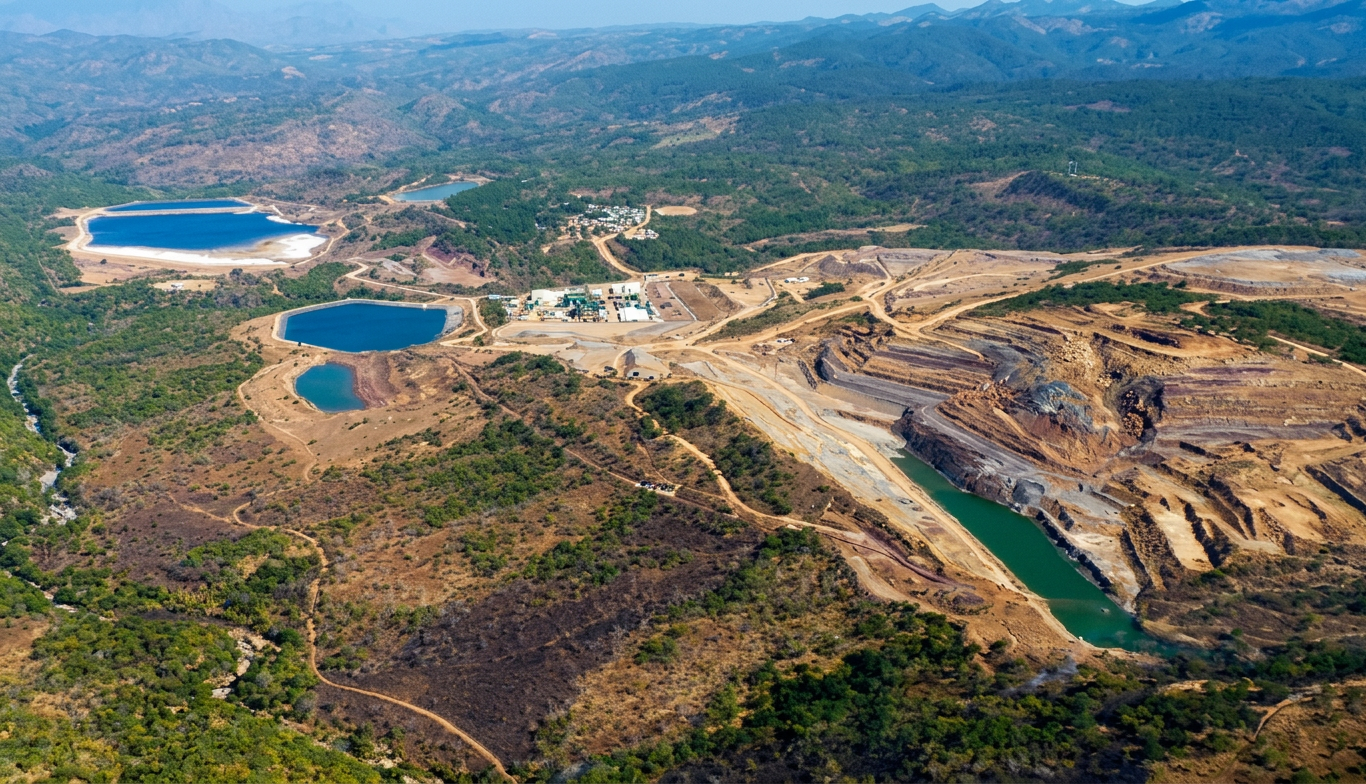
Malawi is at a pivotal point in its economic journey. As the world shifts increasingly towards renewable energy, demand for key minerals such as rutile, graphite, and rare earth elements is growing. This change is transforming Malawi from a minor player in global trade to a potentially important supplier for new energy and industrial systems. As Emmanuel Chinkaka from the Malawi University of Science and Technology notes in his insights shared on the Mining Review Malawi Facebook page, the real questions now are not if Malawi will join this shift, but how it can do so in a way that is fair, sustainable, and focused on development for its people.

This moment should be seen not just as a chance for technological or economic growth, but also as a challenge that touches on broader political and economic dynamics. It’s important to recognise how these elements intertwine and impact our society.
History teaches us an important lesson: just having natural resources doesn’t guarantee a country’s progress. In many parts of Africa and the Global South, we’ve seen that while resource wealth from extraction yields short-term gains, it often fails to create real, lasting change. Instead, this has frequently resulted in environmental harm, weak governance, and communities that continue to struggle economically, despite the riches being pulled from their lands. Malawi is no exception to this trend. The story of the Kayelekela uranium mine vividly illustrates this reality. Despite the potential for wealth from its mineral resources, the community has not experienced the broad benefits we would hope to see from such initiatives. Instead, many locals remain just as impoverished as they were before the mine began operations.

Kamtukule and others (2025) have highlighted an important point about Malawi’s mining sector: the real challenge isn’t resource availability but governance. What really matters is how well the government can negotiate, regulate, and oversee mining activities to ensure they support the country’s development goals. This perspective reinforces a key argument from the technical file: it’s the policies we put in place, rather than the minerals themselves, that will ultimately shape the country’s outcomes.
Looking at the situation through a political economy perspective takes this argument to a deeper level. It doesn’t just focus on what policies need to be in place; it also explores the motivations behind those policies, who has the power to shape them, and how that power is distributed among different groups within the system. It’s about understanding the bigger picture and recognising the interconnectedness of policy, influence, and power.
From opportunity to contestation: Who benefits from mineral wealth?
Malawi’s mining scene is evolving, with significant projects like the Kasiya rutile-graphite development making waves as one of the largest in the world. There are also exciting rare-earth ventures underway at Kangankunde and Songwe Hill, which could position Malawi as a major player in supplying essential materials for electric vehicles and renewable energy technologies, ultimately supporting global efforts to reduce carbon emissions.
Interest in Malawi’s mineral wealth is growing, especially as firms such as Chilwa Minerals Limited get involved in the Kasiya project, and companies such as Mkango Resources Limited and Lindian Resources Limited invest in rare-earth projects. This enthusiasm from investors paints a hopeful picture for the country’s mining future.
However, the experience of the Kayelekera Uranium Mine serves as a cautionary tale. While it brought in export revenues and royalties for the government during its operation, the broader benefits for local communities were limited. Many faced displacement problems, environmental risks, and struggled with economic integration. Moreover, when global uranium prices dropped, leading to a pause in operations, the local economy suffered significantly.
This situation raises a crucial question about the political and economic dynamics at play: how can Malawi ensure that large-scale mining investments generate revenue while also driving sustainable development and real benefits for local communities? This challenge remains at the forefront as the country navigates its burgeoning mining landscape. Who captures the value generated by mineral extraction—and how is that value distributed?
The answer really hinges on a few key factors. It’s not just about the policies in place; it’s also about how well people negotiate, how strong the institutions are, and how power dynamics play out among the government, investors, and local communities. Everything’s interconnected, and that’s what makes finding a solution so complex.
Policy is necessary, but not sufficient.
The technical file presents a thoughtful and engaging collection of policy recommendations that emphasise the importance of several key areas: adding value, involving the community, ensuring environmental governance, strategic planning, and fostering transparency. These elements are vital for creating an effective framework for mineral governance that truly benefits everyone involved.
However, experience across Malawi’s development sectors suggests that policy design alone does not guarantee implementation. The key challenge lies in the incentives and constraints facing different actors.
Political leaders often back mining projects that look good on paper, offering quick financial returns or flashy investments, even if they don’t bring much value in the long run. Bureaucratic officials might struggle to enforce complicated regulations simply because they lack the necessary expertise or independence. Meanwhile, private companies, motivated by profit, frequently push back against rules that might raise their costs, such as those requiring local processing or environmental protections. On the other hand, local communities, who are crucial to discussions about inclusion, often lack the proper channels to make their voices heard in these important decisions.
In this context, the focus shifts from simply determining whether Malawi has the right policies in place to considering whether the entire system is set up to allow those policies to be implemented and maintained over time.
Integrating the policy example: The ban on exporting mineral samples
A telling example of the struggle between ambitious policy goals and the practical realities of political and economic factors is President Arthur Peter Mutharika’s decision to prohibit the export of mineral samples from Malawi. The reasoning behind this directive was straightforward: to enhance the country’s control over its natural resources and ensure that the value generated from them stays within Malawi. By limiting the export of raw mineral samples, the policy was designed to protect important geological information, avoid underestimating the true value of minerals, and encourage local analysis and processing. Ultimately, it was about empowering Malawi to benefit more from its rich mineral resources. This is brilliant!!
This directive addresses the challenges of converting policy intentions into effective outcomes. It raises a valid concern that many resource-rich countries share: the risk of external actors exploiting not only mineral resources but also the information gaps that exist within local communities. Additionally, it emphasises the significant limitations of Malawi’s institutions. The country lacks the necessary capacity for advanced testing, certification, and valuation of its minerals. If we restrict the export of samples without simultaneously developing local analytical capabilities, we may create obstacles in the exploration process. This could deter new investments and ultimately slow down the sector’s development. One potential solution to building capacity would be to require mining investors to establish mineral-testing infrastructure, which they could later commercialise.
From a political economy standpoint, this directive highlights a significant challenge: for the government to effectively manage resources, it must not only want to exert control but also have the means to do so. If there isn’t a solid foundation of technical institutions, skilled workers, and robust regulatory systems in place, well-intentioned policies designed to keep value can end up having the opposite effect. Investors might face delays, uncertainty, and unexpected costs, while the government may struggle to enforce rules or confirm that desired outcomes are being achieved.
The key takeaway here is not that these directives are off-base, but rather that they need to be part of a larger, well-thought-out strategy. For instance, we could adopt a step-by-step approach that ties restrictions on sample exports to efforts to strengthen our domestic laboratory capabilities, build partnerships with international certification organisations, and establish clear regulatory guidelines. By doing this, the policy shifts from a mere reactive measure to an active contributor to the development of the entire value chain.
Value addition: An economic and political challenge
The push for local value addition is a crucial recommendation outlined in the technical file. By shifting our focus from simply exporting raw materials to processing and enhancing these goods, we can create jobs, boost tax revenues, and ignite industrial growth. However, it’s important to recognise that value addition isn’t just about economics or technicalities; it also involves navigating complex political and economic dynamics.
To successfully process minerals in our own country, we need a few key things: a steady, reliable energy supply, significant investment, skilled workers, and policies that remain consistent over the long haul. We also have to face off against established interests that profit from the current system of exporting raw materials. Often, global supply chains are designed to benefit industrialised nations, making it tough for countries like Malawi to advance and add more value to our resources.
Without addressing these structural and political constraints, the aspiration for value addition risks remaining rhetorical.
Community Participation: From principle to practice
The technical file highlights the importance of communities having a say in decisions that affect them, citing methods such as Free, Prior, and Informed Consent (FPIC). This really signals a positive move toward governance that includes everyone and is fairer. However, how well these methods work in practice depends on a few key factors: whether communities can engage meaningfully, how transparent the information is, and how willing both the government and investors are to listen to and incorporate local concerns. It’s all about creating genuine dialogue and understanding between all parties involved.

The insights gained from Kayelekela and similar projects highlight a common challenge: community engagement often falls short. It tends to be limited, reactive, or merely a box-ticking exercise rather than a genuine, meaningful involvement. Without robust institutional frameworks and effective enforcement mechanisms in place, there’s a real danger that participation will be more about appearances than about actual positive change.
Environmental governance: The long-term test
Environmental sustainability is a crucial aspect that we can’t overlook. Mining projects often come with significant risks, including land degradation, water pollution, and lasting harm to ecosystems. To address these concerns, it’s important to implement measures like Environmental Impact Assessments, rehabilitation plans, and closure bonds. However, the success of these initiatives really hinges on a few key factors: the strength of regulatory frameworks, the robustness of monitoring systems, and effective enforcement. In places where institutions are underdeveloped, there’s a real danger that environmental promises could be sidelined by immediate economic or political pressures.
Transparency and accountability: The core governance challenge
The technical file emphasises the vital role of transparency initiatives, such as the Malawi Extractive Industries Transparency Initiative (MWEITI). While transparency is essential, it’s not the only piece of the puzzle. It’s important that information is not just available but also easy to access, understand, and act upon. Most crucially, this information needs to be linked to accountability measures that ensure real consequences for those who don’t comply. Without these elements, transparency could become just a box-ticking exercise rather than a meaningful tool for better governance.


The Malawi 2063 lens: Aligning mining with transformation
Malawi has a vision for its future, called Malawi 2063, which focuses on becoming more industrialised and self-sufficient, and on transforming its economic structures. The mining sector could play a big role in achieving this vision, but it needs to be connected to it in meaningful ways. This means we must integrate mining into broader industrial policies, link extraction processes to local value chains, ensure that mining revenues are reinvested in productive sectors of the economy, and build strong institutions to manage the complex financial flows generated by these resources. Without this integration, there’s a real risk that mining will become an isolated sector, generate revenue but fail to contribute to the country’s overall development and transformation.
Conclusion: Defining the terms of extraction
Malawi is sitting on a treasure trove of minerals, which offers a real chance for growth and development. However, this opportunity comes with its own set of challenges. The critical question isn’t whether the country will tap into its mineral resources; it’s about how it will manage that process. As Emmanuel Chinkhaka points out in his technical report, this situation ultimately boils down to governance. Looking at it from a political economy perspective makes it even more evident: the success of mineral extraction will hinge not just on the policies put in place, but also on how power dynamics, incentives, and institutions interact to shape their implementation.
Closing Reflection
Malawi’s future in mining goes beyond the land’s geology. It’s really about a few key factors:
- Strong institutions: The strength of the organisations and systems that will manage the mining sector is crucial. You may visit the Malawi Mining Authority’s website at [http://www.mma.gov.mw/ (http://www.mma.gov.mw/). This site provides information on the authority’s role in managing and regulating the Malawi mining sector.
- Clear strategy: Having a well-defined plan is essential for guiding industry development.
- Balance of power: It’s important to have a fair distribution of influence among various stakeholders involved in mining.
The minerals are abundant, and the prospects are promising. However, whether this resource translates into genuine development for the country or simply becomes a means of extraction will ultimately hinge on the choices Malawi makes today. The decisions made now will shape the future for generations to come.
References
Kamtukule, V. , Tembo, M. , Ng’ambi, G. , Benard, S. and Kalinga, M. (2025) In the Political Trenches: Exploring Governance Arrangements for Local Community Participation in Malawi’s Mining Communities. Open Journal of Political Science, 15, 311-343. doi: 10.4236/ojps.2025.152018.
Leave a Reply