
For years, Arsenal Football Club carried the burden of ridicule. The club became one of the easiest targets in football discourse. Pundits mocked the team relentlessly. Rival fans celebrated every dropped point as though it were a trophy. Every setback became evidence that Arsenal would never rise again. Every transfer decision was questioned. Every season without silverware became another chapter in the global campaign of negativity surrounding the club.
Over time, this criticism evolved into something deeper than football analysis. It became an attempt to psychologically break belief itself.
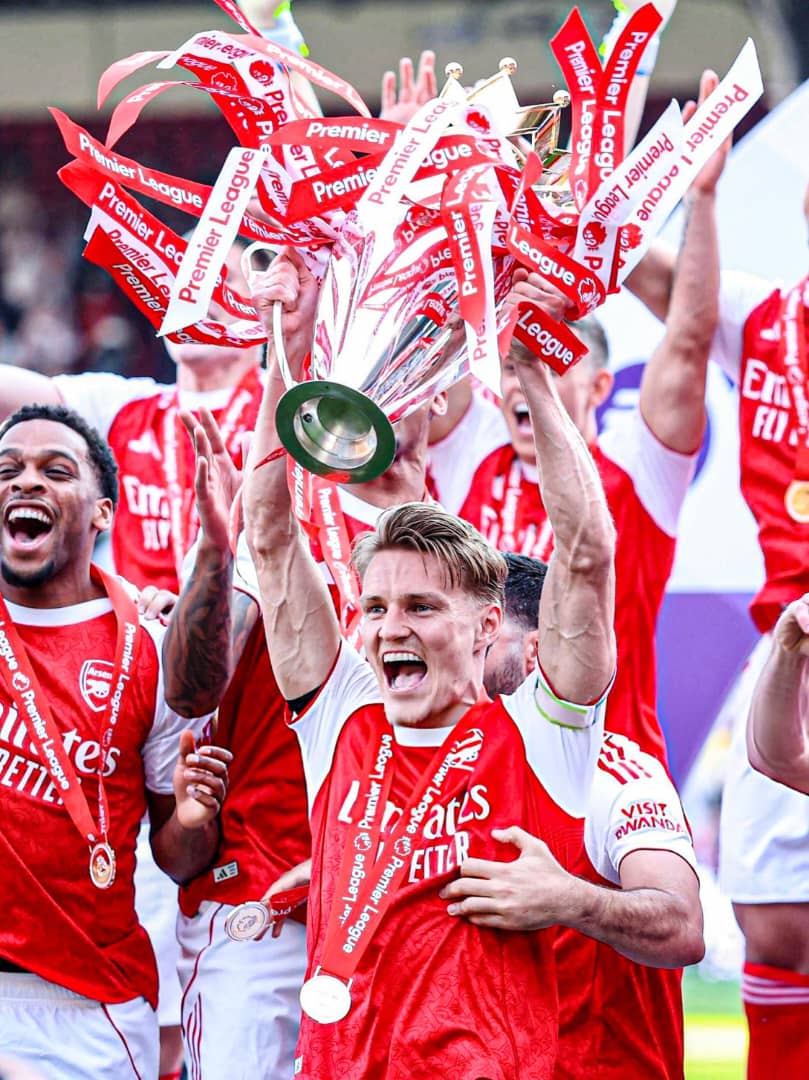
Amid the noise, something extraordinary occurred during the 2025/26 season: Arsenal finally secured the English Premier League title, lifting the trophy at Selhurst Park as the players, manager, and fans all maintained their focus.
But the significance of this victory goes far beyond football. It is a lesson about life, leadership, resilience, and the power of remaining committed to a vision even when the world constantly doubts it.
One of the most remarkable aspects of Arsenal’s journey was the unwavering belief of its supporters across the globe, particularly throughout Africa. In countries such as Uganda, Kenya, Malawi, and Nigeria.

Arsenal is not simply a football club. It is almost a social identity. Entire weekends revolve around the emotional rhythm of the club. Friendships, arguments, WhatsApp groups, workplaces, and neighbourhood conversations are shaped by football loyalties.
In the heart of Malawi, townships like Ntandire, Mgona, Zolozolo, Chiputula, Chilobwe, Bangwe, and Ndirande are not just places to live; they are vibrant communities where the spirit of togetherness thrives, often united by a shared passion for football, particularly for Arsenal.
In Ntandire, amidst the laughter of children and the friendly matches in dusty fields, Arsenal becomes a symbol of hope and determination. The youth here often don jerseys representing their favourite team, imbuing the community with a sense of pride and belonging as they play informal games, imagining themselves as the next big stars. The bond formed over these matches fosters unity and resilience, as fans come together to cheer for their team, igniting a shared dream of success.
Just a short distance away in Mgona, the aroma of street food blends with the excitement of football discussions. Local vendors and community centres serve as gathering spots where fans connect over their shared admiration for Arsenal. Whether it’s sharing game highlights or organising viewing parties, the team’s victories and defeats spark conversations and weave stronger ties among neighbours, reinforcing a sense of community identity.
Travelling north to Mzuzu, Zolozolo’s vibrant markets echo with discussions about Arsenal’s latest matches. The spirit of entrepreneurship here is mirrored in the passion for the game, as local artisans create memorabilia or crafts inspired by their favourite team. Over cups of warm chai, dreams are exchanged not just about personal aspirations but also about the joy and camaraderie of being part of the global Arsenal fanbase. In Chiputula, local music and dance also reflect the high spirits that football brings, often celebrating not just the game but the shared joy of supporting a team whose success resonates beyond its borders.
In Chilobwe, a neighbourhood in Blantyre, creativity is expressed through art, with many artists drawing inspiration from their pride in being Arsenal supporters. Art galleries and exhibitions often showcase works that celebrate the team’s legacy, capturing the emotions and stories that stem from the fan experience. Similarly, in Bangwe, local soccer fields serve as stages where rivalries come to life. The passion of Arsenal fans fosters friendships, with many local teams named after the club. This not only ignites spirited debates but also strengthens the sense of belonging among supporters.
Finally, in Ndirande, the nurturing community bridges generations, with elders sharing not only traditional stories but also tales of Arsenal’s historic matches and legendary players. This connection to a global sport fosters discussions about perseverance, teamwork, and community, values that resonate deeply in these neighbourhoods. As families gather to enjoy football nights, the love for Arsenal transcends age and background, creating lasting bonds and instilling a shared pride in their cultural identity. Through the lens of football, particularly their affiliation with Arsenal, these townships in Malawi demonstrate how sports can unify communities, encourage collaboration, and inspire resilience amidst life’s challenges.
Arsenal fans endured years of mockery, especially from supporters of rival clubs who constantly reminded them of past failures and missed opportunities. Yet despite everything, they continued believing. That belief matters. Because belief is one of the most powerful forces in both sport and life. Long before success becomes visible externally, it must survive internally. Arsenal supporters kept believing through difficult seasons, painful defeats, social media ridicule, and endless criticism from pundits and rivals.
This is what makes the victory emotionally significant, particularly across Africa, where football fandom is deeply emotional and communal.
In Malawi, Arsenal fans carried hope almost stubbornly. While others mocked the club for “trusting the process,” Arsenal supporters continued defending:
- Mikel Arteta’s vision
- the rebuilding project
- the younger players
- and the long-term direction of the club
And when the title finally arrived, something interesting happened.
Even after Arsenal’s victory, rival fans struggled to allow Arsenal supporters to celebrate freely. They expected these supporters to remain silent and not celebrate after a 22-year wait. In Salima, some Arsenal fans sought permission from the district council to parade in the streets. Rival fans accused them of over-celebrating. In Lilongwe, a parade is planned for May 30, 2026, but there is already significant opposition to its cancellation, with concerns raised about noise pollution affecting the city and surrounding neighbourhoods.

This reveals an important truth about success:
Sometimes people become so invested in your failure that your success makes them uncomfortable.
Instead of simply acknowledging Arsenal’s achievement, many rivals immediately shifted the conversation:
- “They were lucky.”
- “The league was weak.”
- “Let’s see if they can repeat it.”
- “Other clubs were injured.”
- “Arsenal faced less competitive opposition”
The celebration itself became contested.
And this is not unique to football.
In life and business, many people are comfortable with your struggle because your struggle reinforces their assumptions about you. Once you succeed, however, your success disrupts their narrative. It forces them to reconsider what they believed about your limits.
This is why many successful people discover that criticism often intensifies after achievement rather than before it. Arsenal’s story, therefore, reflects something much larger than sport. It is about the discipline required to ignore noise.
We live in a time where distraction seems to be everywhere. Social media often seems to thrive on outrage rather than understanding; it’s easier to get attention for being negative than for sharing quiet, meaningful progress. In this kind of atmosphere, it’s easy to fall into the trap of reacting to anger and drama instead of focusing on building something positive.
Take John Obi Mikel and Jamie O’Hara, for example, both former players of Chelsea and Tottenham, respectively. They’ve found that by criticising Arsenal, they can attract more views for their podcasts. It’s as if the animosity towards Arsenal has become a source of income for them. This trend highlights just how our world can sometimes prioritise controversy over constructive conversation.
Arsenal succeeded because the club stopped reacting emotionally to criticism. Instead, it committed itself to structure, patience, systems, and long-term development. While critics focused on short-term setbacks, Arsenal focused on building foundations. This is one of the hardest things to do in modern life. Most people abandon their vision too early because criticism becomes emotionally exhausting, progress is slow, and external validation disappears. But meaningful success often requires surviving long periods where outsiders misunderstand the vision, progress is not fully visible, and doubt becomes constant.
In business, this happens all the time. Entrepreneurs are mocked before they succeed. Visionaries are doubted before results become obvious. Organisations are criticised while still in the rebuilding phase. Many fail not because their strategy was wrong, but because they became distracted by external voices.
The strongest businesses and leaders are usually those capable of emotional discipline. They understand that success is built through repetition, consistency, systems, and resilience. Arsenal’s title win demonstrates exactly this principle.
The club didn’t just achieve success in a flash; it was a journey that took years of hard work and determination. Behind the scenes, a lot of effort was underway, often under the watchful eye of an eager public. The players didn’t just wake up one day as stars; they grew and developed gradually. The strategies became more solid, step by step, and the team’s mindset transformed over time. It was a quiet evolution that laid the groundwork for their eventual triumph.
The results began to speak for themselves, making it hard to overlook their significance. This story resonates deeply with people, especially in Africa, where many can relate to feeling underestimated. Arsenal fans in Uganda, Kenya, Malawi, Nigeria, and beyond held onto hope and belief during tough times, even when giving in to negativity would have felt like the easier option. Their unwavering spirit embodies a journey that transcends just football; it’s about resilience, faith, and the strength found in community.
Loyalty and patience have finally paid off. But one of the biggest takeaways from Arsenal’s journey is this: Winning doesn’t end the criticism; it just shifts the focus. Even after achieving success, the chatter doesn’t go away. That’s why staying focused is so crucial. The real strength in life isn’t about getting rid of the noise; it’s about learning to keep moving forward and building your dreams despite it all.
At the end of the day, there will always be critics, distractions, and those who doubt our dreams. But it’s often not the loudest voices that achieve success; it’s the ones who show discipline and persistence. The true winners are the people who continue to believe in themselves, keep building their path, and stay focused, even when the noise around them gets overwhelming. Arsenal’s recent victory reminds us of this important lesson: the world might not always cheer for us, but that shouldn’t deter us from striving for our own success. Keep pushing forward, regardless of the doubts that may come from outside.
Conflict of Interest Declaration: I am an Arsenal fan and a long-term victim of ridicule.
Leave a Reply