

The city that once said No
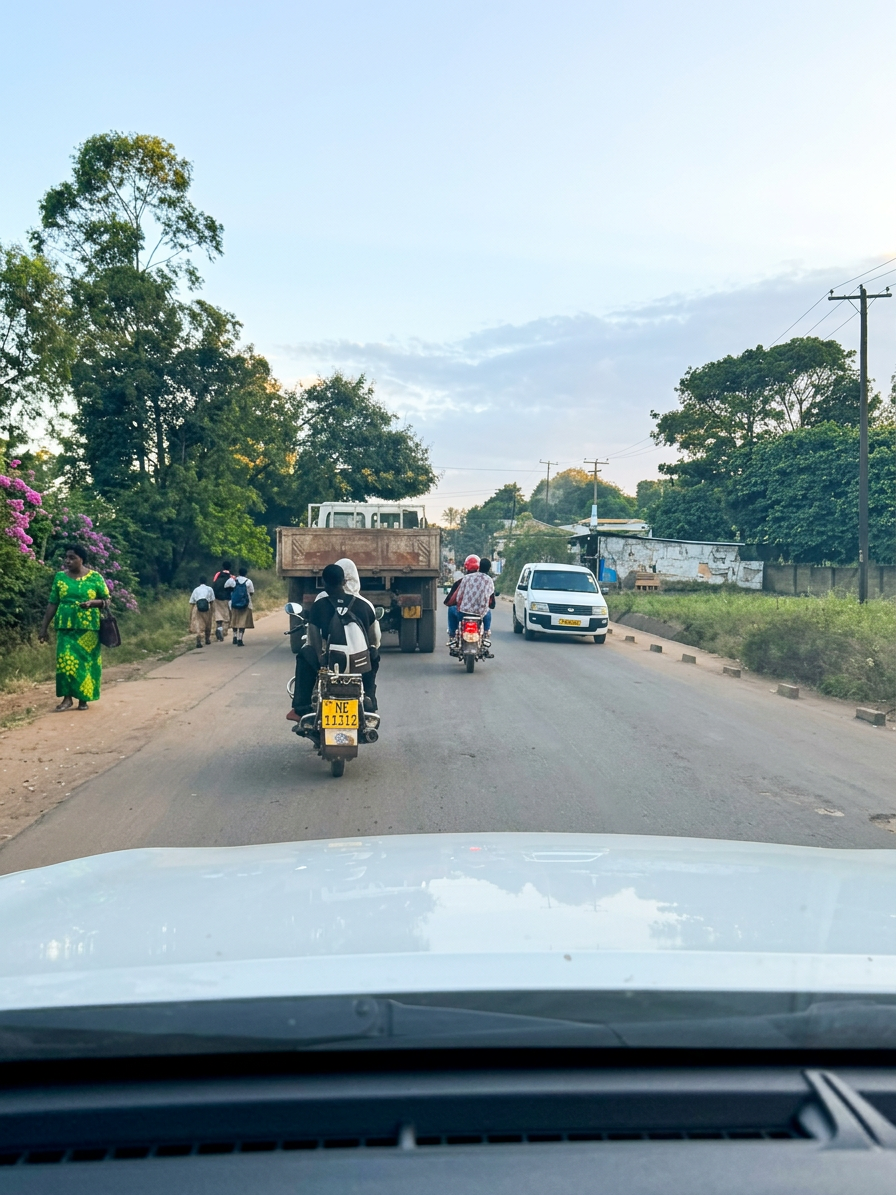
On Friday, 29th May 2026, I travelled to Blantyre to attend our niece’s graduation ceremony at the Catholic University of Malawi. The graduation was a wonderful celebration of achievement and hope, but what caught my attention was something entirely different. It was the sheer number of motorbike taxis.
In Bangwe, Chirimba, Machinjiri, Chilomoni, Chileka, Limbe and several other parts of the city, motorbike taxis had become a dominant feature of urban life. They were everywhere. Young men waited at junctions. Motorbikes lined shopping centres. Passengers climbed on and off with the ease and familiarity that Lilongwe residents have displayed for more than a decade.
For many Malawians this may not seem remarkable. Lilongwe embraced Kabaza around 2013. Mzuzu followed with what many people loosely refer to as Sacramento. The motorbike taxi has long become part of everyday urban transport in those cities. But Blantyre was different.
The humorous side of a serious story.
There is a certain irony in watching Blantyre undergo a transformation that its residents spent years criticising elsewhere. For years, some residents of Blantyre looked at Lilongwe’s Kabaza culture with a mixture of amusement and superiority. Now the same city that once prided itself on avoiding such transport systems has embraced them at remarkable speed.
Because the sight of Motorbike Kabaza was overwhelming, I shared a WhatsApp status update “Anthu a Ku Blantyre adziwa Njinga zamoto za Kabaza. Koma atengeka nazotu……..zikungoti nvi…nvi…nvi” It was shocking, quite frankly.
For years, Blantyre proudly resisted this model. The city saw itself as Malawi’s commercial capital, the home of organised commerce, cleaner streets, and more structured urban systems. Many residents openly criticised the spread of Kabaza elsewhere. The argument was usually framed around safety, order, and the maintenance of standards.
One can almost imagine a conversation from ten years ago: “We are Blantyre. We don’t do Kabaza.” Fast forward to 2026:”Boss, Kabaza ku Chirimba ndi zingati?” But beneath the humour lies a much more serious economic story. The rise of motorbike taxis is not necessarily evidence of progress. In many cases, it is evidence of economic distress.
Yet here we are. The city that once looked down upon Kabaza has now embraced it. The bourgeoisie of Malawi are now riding motorbike taxis. The question is simple: How on earth did this happen?
The fuel crisis and the economics of survival
Part of the answer lies in the unprecedented fuel crisis that Malawi has experienced. Fuel prices have risen dramatically in a relatively short period. What cost approximately K2,734 per litre in October 2025 reportedly rose to around K6,687 per litre by May 2026. Such increases have profound consequences for urban transport systems. Minibus operators face:
- escalating fuel costs
- rising spare parts costs
- increasing maintenance expenses
At the same time, passengers face declining purchasing power. Households are under pressure. Businesses are struggling. Disposable income continues to shrink. In such an environment, motorbike taxis become attractive because they consume less fuel, require lower capital investment, and remain operational even when traditional transport systems struggle.
The rise of Kabaza in Blantyre is therefore not necessarily a transport innovation. It is an economic adaptation to a crisis. When formal systems become too expensive, informal systems emerge to fill the gaps. Life is not designed to have a vacuum (a topic for another day).
The unemployment crisis nobody wants to discuss
The second explanation is unemployment. Every year, Malawi produces: university graduates, college graduates, skilled artisans and MSCE school leavers.
Yet the economy is not producing jobs at the same pace. The industrial sector remains weak. Manufacturing contributes only a modest share of economic activity. Large-scale productive investment remains limited. The country’s industrial parks and special economic zones have struggled to attract sufficient activity.
As a result, many young people are forced into what economists call survival entrepreneurship.
The motorbike taxi business requires relatively low capital. One motorbike immediately generates income. Compared with establishing a factory, a transport company, or a manufacturing enterprise, the barriers to entry are low. The growth of Kabaza, therefore, reflects not just transport demand, but labour market failure. It represents thousands of young people creating livelihoods where the formal economy has failed to create jobs.
What Lilongwe and Mzuzu have already learned
The experience of Lilongwe and Mzuzu should serve as a warning to Blantyre. While motorbike taxis undoubtedly improve mobility and create income opportunities, they also generate significant developmental challenges. Road safety is perhaps the most obvious.
Motorbike accidents have become increasingly common in cities where Kabaza operations are widespread. Many riders operate with limited training. Some lack proper licensing. Safety equipment is often inadequate. Competition for passengers encourages risky behaviour. The experience in Bangwe was shocking. One bike carried 3 passengers and a rider, and none had a helmet on.
Hospitals increasingly treat injuries resulting from motorbike crashes. Lilongwe Central Hospital is overwhelmed by the number of road traffic accidents. Statistics indicate that 90% of these accidents are Kabaza-related. Families bear both emotional and financial costs. The burden is not only social but economic. Every accident creates costs that ultimately affect:
- households
- hospitals
- insurance companies
- public health systems
The rapid expansion of motorbike taxis has also exposed weaknesses in regulation. The Road Traffic Directorate has struggled to keep pace with the sector’s growth. Traffic police face enormous enforcement challenges. Registration systems remain inconsistent. Questions about insurance coverage remain unresolved in many cases. The result is a transport sector growing faster than the institutions designed to regulate it.
The crime dimension
It is important to avoid unfairly stigmatising motorbike operators. The overwhelming majority are hardworking individuals attempting to earn an honest living. However, experience in Lilongwe, Mzuzu, and several other cities has shown that unregulated transport systems create opportunities for criminal activity.
Motorbikes are fast. They are mobile. They are difficult to track. This makes them attractive for:
- theft
- quick escapes
- transportation of stolen goods
- opportunistic crimes
The issue is not the motorbike itself. The issue is weak regulation. Where registration systems are poor, enforcement is weak, and oversight is limited, criminal elements exploit the system. Blantyre should learn from the experiences of Lilongwe and Mzuzu before the sector expands beyond effective control.
The bigger development question
The most important issue is not transport. It is development.
The proliferation of motorbike taxis should not be celebrated as evidence of economic progress. It should be viewed as an indicator of deeper structural problems.
Healthy economies create productive jobs in:
- manufacturing
- industrial processing
- technology
- logistics
- engineering
- construction
When large numbers of young people move into low-productivity informal activities, it signals that the economy is struggling to absorb labour into higher-value sectors. Motorbike taxis are not creating an industrial transformation. They are providing survival. And there is a profound difference between survival and development.
Countries do not become prosperous by expanding informal transport systems. They become prosperous by building industries that absorb labour at scale and generate productivity growth.
The real question, therefore, is not why Blantyre now has Kabaza. The real question is why Malawi still lacks enough factories, industries, technology firms, and productive enterprises to absorb the thousands of young people entering the labour market every year.
A warning for Malawi
The arrival of Kabaza in Blantyre should be understood as a warning signal.
It reflects rising fuel costs, declining purchasing power, weak industrialisation, growing unemployment, and a struggling formal economy. The fact that even Blantyre, the city that resisted this model for years, has now embraced it suggests that economic pressures have become too powerful to ignore.
This is not merely a transport story. It is a story about an economy increasingly organised around survival rather than transformation.
Where are the factories?
This is perhaps the most important question. Why are we celebrating the growth of Kabaza while:
- factories remain scarce
- industrial parks remain underdeveloped (Chigumula, Magwelo and Luwinga)
- Manufacturing remains weak
The real developmental challenge is not transport. It is the absence of productive sectors capable of absorbing labour at scale. Until Malawi builds manufacturing industries, technology ecosystems, industrial parks, and export-oriented enterprises, young people will continue searching for survival opportunities wherever they can find them. Today it is Kabaza. Tomorrow it may be something else. The underlying problem remains unchanged.
Conclusion
The spread of motorbike taxis into Blantyre tells us something important about Malawi’s economy. The city that once resisted Kabaza has now embraced it, not necessarily because it wanted to, but because economic conditions increasingly make it difficult to avoid. The spread of motorbike taxis should therefore not be viewed simply as progress or modernisation.
It tells us that the country is struggling to create enough productive employment. It tells us that industrialisation remains incomplete. It tells us that public policy has not yet succeeded in moving labour from low-productivity activities into higher-value sectors. Most importantly, it reminds us that economic transformation cannot be measured simply by how people survive. It must be measured by how many people prosper. And on that measure, Malawi still has a long journey ahead.
Leave a Reply